
By Brad Heath

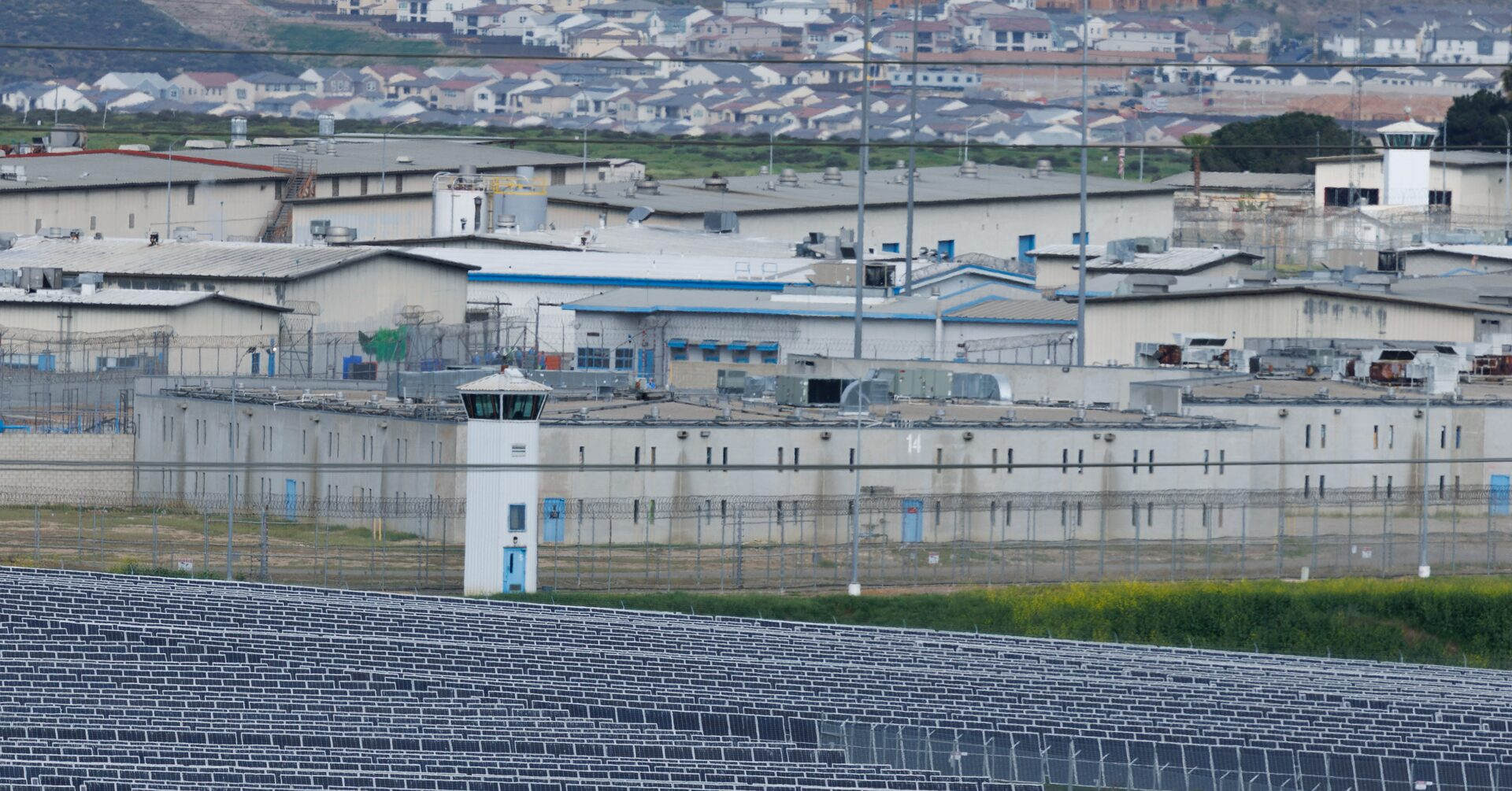
A view shows the Richard J. Donovan Correctional Facility state prison in San Diego, California, U.S., April 16, 2025. REUTERS/Mike Blake/File Photo Purchase Licensing Rights , opens new tab
WASHINGTON, Feb 4 (Reuters) – State prisons in the United States became more violent and nearly 50% deadlier over the past five years as authorities struggled to keep enough guards on the job, according to a government-funded report to be released on Wednesday.
The United States locks away more people than any other nation, including about 1 million people in state-run prisons. The previously unreported evaluation, paid for by the U.S. Department of Justice and conducted by an initiative called Safe Inside, found that those systems are under increasing strain, even as many states sharply reduced the number of people they locked up.
“We have less staff and they’re asked to do more,” said John Wetzel, a former head of Pennsylvania’s prison system and the chairman of Safe Inside, a nonpartisan research effort focused on improving state prisons. “We’re seeing the increased deaths, increase of assaults and there’s no argument that these are going up.”
The staff shortages mean prisons have fewer people on duty to protect inmates, and fewer who can take them to medical appointments, Wetzel said.
The rising death rate came as the number of assaults on inmates increased 54% over the same period, and the number of assaults on prison staff rose 77%, the review found. The report did not include details about the raw numbers of assaults.
The death rate among state prisoners increased 47% between 2019 and 2024, the most recent years for which the organization could gather data. The deaths include homicides, suicides and violence, and the report concluded that understaffing and high turnover “likely contribute” to the increase, though researchers said they lacked enough data to prove causation.
The review based that report on conditions in 12 state prison systems; most of the rest, it said, did not report adequate information on the number of people who died in their custody. It found that the death rate was 2.8 for every 100,000 prisoners in 2019; by 2024 it had risen to 4.1.

“There is not enough personnel to provide the attention that is needed to people in state custody,” said Maria Goellner, vice president of Families Against Mandatory Minimums, which advocates reducing the number of people in prison. “So you do see increased neglect, abuse and violence, and horrendous prison conditions.”
She added part of the problem is that states are imprisoning people “who don’t need to be there.”
The increase in deaths was particularly sharp in some states. In Alabama, researchers documented 337 inmates who died in 2024, compared to 99 in 2019. In California, which operates one of the nation’s largest prison systems, deaths among inmates were largely unchanged even though the state cut its prison population by nearly a quarter.
Spokesmen for the Alabama and California prisons did not respond to questions about the deaths.
The researchers chose those years so that they would not capture deaths from the coronavirus pandemic, which wreaked havoc in some jails and prisons and also pushed state and local governments to free thousands of people to slow the virus’s spread. Michael Thompson, the director of Safe Inside, said the death rate has increased faster than could be explained by prisoners getting older or sicker.
Prisons throughout the United States have struggled for years to hire enough guards and other staff, and to keep the ones they have. New York , opens new tab and Florida , opens new tab have sent thousands of National Guard soldiers to fill gaps in understaffed prisons.
The Safe Inside review found understaffing cost states more than $2 billion in overtime in 2024, 80% more than five years earlier. Some prison workers told researchers that they worked multiple 18-hour shifts in a row and that some facilities were so shorthanded that it was common for guards to be unable to take a bathroom break because there was no one to fill in for them while they were gone. That pressure, in turn, makes it harder to keep workers from quitting.
In Michigan, for example, the report found that one of every six prison jobs was unfilled last year. At some prisons, almost a third of jobs were vacant.
A spokeswoman for Michigan’s Department of Corrections, Jenni Riehle, said the rate of unfilled jobs had fallen slightly since then.
Our Standards: The Thomson Reuters Trust Principles. , opens new tab
Suggested Topics:
Brad Heath is an enterprise reporter in Washington. He focuses on law enforcement, criminal justice and using data to find out what the government is doing. He is a graduate of Georgetown University Law Center and is a member of the Virginia bar.
OUTLAW CHEMICAL FREE SOAPS AND NATURAL BODY PRODUCTS!

PPR MERCH HERE NOW! CLICK THE AD TO SHOP!!!


Entertainment News
Jamie Lee Curtis Details “Miracle” of 27 Years of Sobriety

Entertainment News
How Jessica Biel “Tried to Spoil” Justin Timberlake for His 45th Birthday
Sports News & More
Best of GLAMBOT: Golden Globes 2026 | E! News

New Orleans Saints News
Saints End Season Presser Reaction | Loomis & Moore

NEW ORLEANS PELICANS
Pelicans Blasts Wizards 128-107, Stop 9 GM Slide | PPR Final

New Orleans Saints News
Tyler Shough Rookie of the Month | ROTY Next?