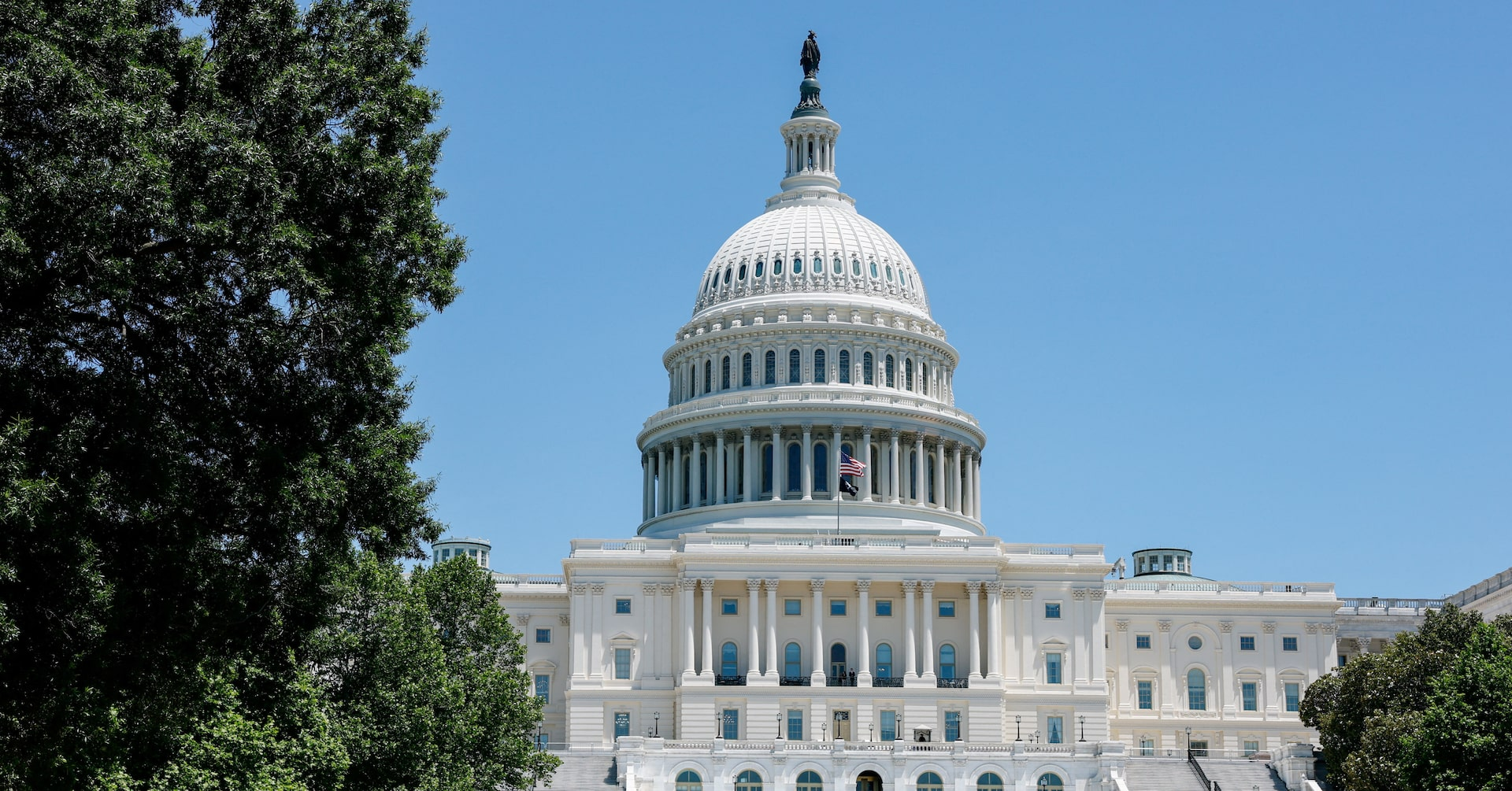


Item 1 of 2 A person maintains the grounds in front of the U.S. Capitol building, on Capitol Hill in Washington, D.C., U.S., June 3, 2026. REUTERS/Kylie Cooper
[1/2] A person maintains the grounds in front of the U.S. Capitol building, on Capitol Hill in Washington, D.C., U.S., June 3, 2026. REUTERS/Kylie Cooper Purchase Licensing Rights , opens new tab
WASHINGTON, June 9 (Reuters) – For the first time since the war on Iran began on February 28, the Republican-led U.S. Congress has backed resolutions that could block Republican President Donald Trump from continuing hostilities, reflecting growing concern among members of his party about the three-month-long conflict.
The House of Representatives voted in favor of a war powers resolution on June 4 and the Senate advanced a separate, but similar, resolution in a procedural vote on May 19 as a handful of Republicans broke with party leadership to vote with almost every Democrat.
This is a look at the U.S. war powers law and what might happen next.
WHAT IS THE WAR POWERS RESOLUTION?
Congress passed the War Powers Resolution , opens new tab, also known as the War Powers Act, in 1973 as a check on presidential power in response to the unpopular Vietnam War. The Act requires the president to inform Congress within 48 hours of hostilities and says military action begun without Congress’ approval must be terminated within 60 days, unless there is an emergency.
With Iran, the 60-day deadline was May 1, which Trump addressed by declaring that the hostilities had been “terminated” by a ceasefire, despite continuing attacks and a blockade of Iranian ports. Legal experts said that argument might not survive judicial scrutiny.
The law also establishes procedures for Congress to vote on war powers resolutions to end hostilities not authorized by the legislature. These resolutions are privileged, meaning they can be brought up for votes even without the approval of House of Representatives and Senate leaders.
The Senate has considered seven resolutions and the House four resolutions related to the Iran conflict since U.S. and Israeli forces started bombing more than 100 days ago.
HOW MANY HURDLES DO THE RESOLUTIONS FACE? Both resolutions face significant hurdles.
The Senate measure has survived only a procedural vote and has not passed the full chamber. Even if it is passed, to go into effect it must also clear the House, whose Republican leaders are unlikely to allow a vote.
And if it passed the House, to go into effect the measure would have to garner the two-thirds majorities needed in both chambers to overcome an expected Trump veto.
The separate measure passed by the House this month would have to pass the Senate, where aides said they were waiting for the parliamentarian to decide whether it is “privileged.” If not, Republican Majority Leader John Thune of South Dakota, who rarely breaks with Trump, is not expected to allow a vote.
SO WHY BOTHER?
The U.S. Constitution says only Congress, not the president, can authorize the use of military force, except for short-term operations or to counter an immediate threat.
Backers of the resolutions say bipartisan congressional approval sends an important signal that lawmakers are trying to take back their power to declare war and rein in Trump’s White House.
Opponents call the resolutions political posturing that emboldens U.S. enemies and may be unconstitutional because they impinge on the president’s powers as commander in chief.
Experts said the votes are important.
“The war powers resolution that was passed by the House sends a strong signal to the president that lawmakers across the aisle think that this war has gone on for too long and violates the war powers resolution as well as the Constitution,” said Katherine Yon Ebright, a war powers expert at the Brennan Center for Justice at New York University.
She said Trump appeared to take the vote seriously, noting that he had called it unpatriotic and said Republicans who sided with Democrats should be ashamed of themselves.
The unpopular war could affect elections in November that will determine whether Trump’s Republicans retain control of Congress. Recent Reuters polling showed that 36% of Americans approved of U.S. strikes on Iran, and only 25% said the benefits of the strikes had been worth the costs.
Our Standards: The Thomson Reuters Trust Principles. , opens new tab
Suggested Topics:
Patricia Zengerle has reported from more than 20 countries, including Afghanistan, Iraq, Pakistan, Saudi Arabia and China. An award-winning Washington-based national security and foreign policy reporter who also has worked as an editor, Patricia has appeared on NPR, C-Span and other programs, spoken at the National Press Club and attended the Hoover Institution Media Roundtable. She is a recipient of the Edwin M. Hood Award for Diplomatic Correspondence.
Read Next
ago World category
ago Legal category
ago Legal category
Chinese President Xi Jinping said he and North Korean leader Kim Jong Un reached an “important consensus” and agreed to safeguard regional and global peace, in a message of thanks following his visit to Pyongyang, North Korean state media KCNA said on Wednesday.
Site Index
About Reuters
Stay Informed
Information you can trust
Reuters, the news and media division of Thomson Reuters, is the world’s largest multimedia news provider, reaching billions of people worldwide every day. Reuters provides business, financial, national and international news to professionals via desktop terminals, the world’s media organizations, industry events and directly to consumers.
OUTLAW CHEMICAL FREE SOAPS AND NATURAL BODY PRODUCTS!

PPR MERCH HERE NOW! CLICK THE AD TO SHOP!!!


NEW ORLEANS PELICANS
Is a Jaylen Brown Blockbuster Trade Worth the Risk for New Orleans?

New Orleans Saints News
Saints NFC South Breakdown: Can New Orleans Contend?

NEW ORLEANS PELICANS
Pelicans Draft Sleepers: 5 Prospects to Watch at Pick 58