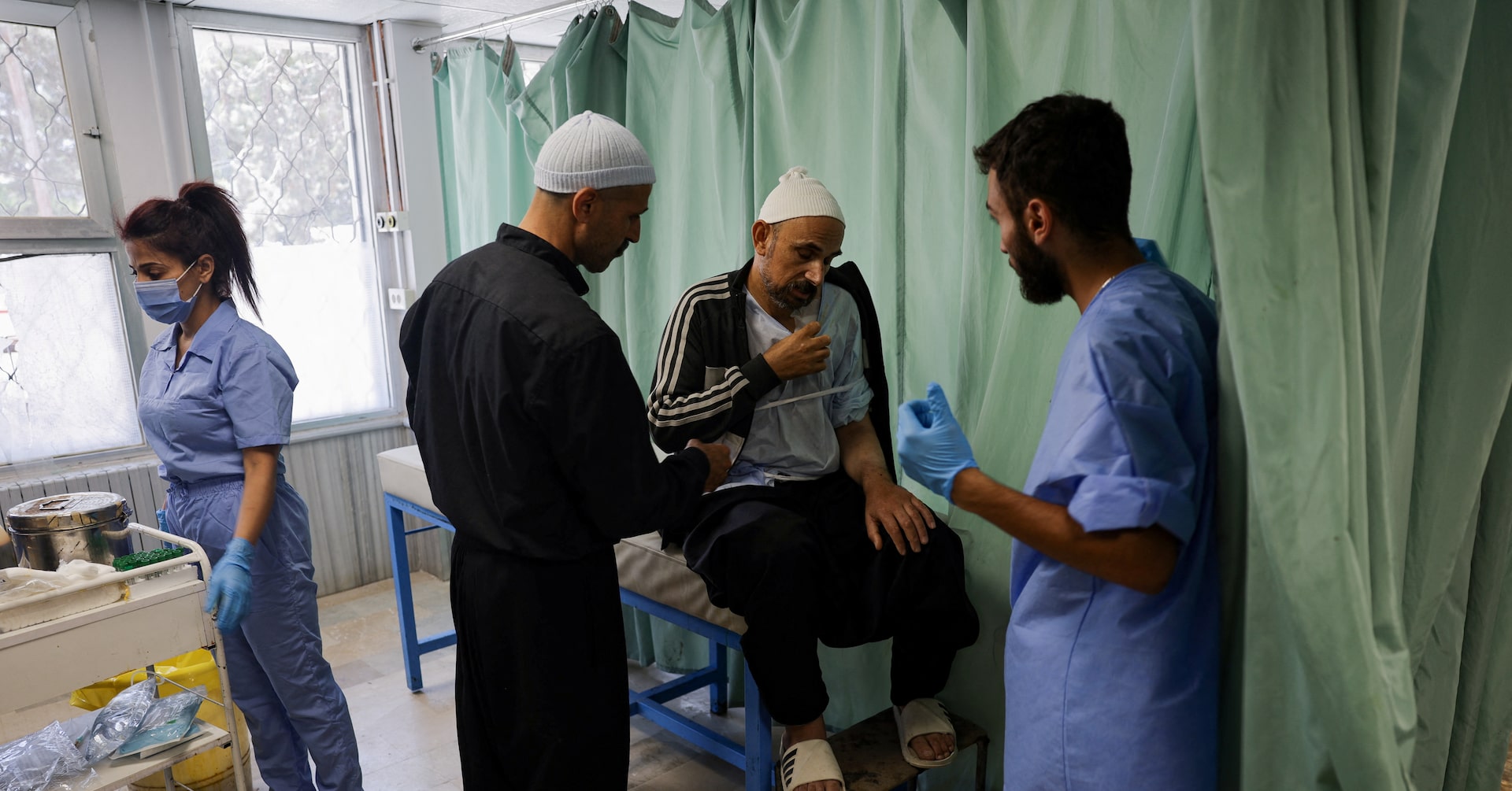


Item 1 of 4 A health worker assists a man at a hospital, following deadly clashes between Druze fighters, Sunni Bedouin tribes and government forces, in Syria’s predominantly Druze city of Sweida, Syria July 25, 2025. REUTERS/Khalil Ashawi
[1/4] A health worker assists a man at a hospital, following deadly clashes between Druze fighters, Sunni Bedouin tribes and government forces, in Syria’s predominantly Druze city of Sweida, Syria July 25, 2025. REUTERS/Khalil Ashawi Purchase Licensing Rights , opens new tab
GENEVA, July 25 (Reuters) – The main hospital in the southern Syrian city of Sweida is overwhelmed with trauma patients and working without adequate power or water after the local Druze minority clashed almost two weeks ago with Bedouin and government forces.
“Inside of Sweida, it’s a grim picture, with the health facilities under immense strain,” the World Health Organization’s Christina Bethke told reporters in Geneva via video link from Damascus.
“Electricity and water are cut off, and essential medicine supplies are running out.”
Many medical staff cannot reach their workplace safely, and the main hospital’s morgue was full at one point this week as it dealt with a surge of trauma cases.
At least 903 people were killed in the sectarian bloodshed, according to the Syrian Network for Human Rights, after clashes between Druze militias and Bedouin tribes spilled into ferocious fighting between the Druze and government forces sent to quell the unrest.
The Network’s head, Fadel Abdulghany, has said the toll is not final, and that his group documented field executions by Syrian troops, Bedouin tribal fighters and Druze factions.
Though the WHO has managed to deliver two convoys of aid in the last week, access remains difficult because tensions remain between the groups controlling various parts of Sweida governorate, it said.
More than 145,000 people have been displaced by the recent fighting, the WHO said, with many sheltering in makeshift reception centres in Daraa and Damascus.
Our Standards: The Thomson Reuters Trust Principles. , opens new tab
Suggested Topics:
Read Next
The street vendor said the few tourists who still visit Culiacan no longer look for posters of drug lord Joaquin “El Chapo” Guzman and accused drug kingpin Ismael “El Mayo” Zambada, once the Mexican city’s most famous residents.
Site Index
About Reuters
Stay Informed
Information you can trust
Reuters, the news and media division of Thomson Reuters, is the world’s largest multimedia news provider, reaching billions of people worldwide every day. Reuters provides business, financial, national and international news to professionals via desktop terminals, the world’s media organizations, industry events and directly to consumers.
Discover more from The Who Dat Daily
Subscribe to get the latest posts sent to your email.



OUTLAW CHEMICAL FREE SOAPS AND NATURAL BODY PRODUCTS!


Tulane College Sports
Tulane vs. South Alabama Preview: Green Wave Seek Week 2 Rebound

New Orleans Saints News
Saints Free $10.3M! Ruiz & Godchaux Restructures Explained | PODCAST

Sports News & More
Why Jared Goff Is Underrated and Dangerous

Sports News & More
Here’s the Saints vs Lions Week 1: Keys to Victory & Score Predictions!

New Orleans Saints News
Saints Add 12 Players to Practice Squad as New Orleans Continues Roster Moves

New Orleans Saints News
Saints Trade for Zamir White as RB Injuries Mount

New Orleans Pelicans News
Pelicans Sign Bennedict Mathurin to 2-Year, $16M Deal

New Orleans Saints News
Saints Looking for WR Help: Four Receivers Work Out Before Lions Opener