
By Ahmed Rasheed and Michael Georgy

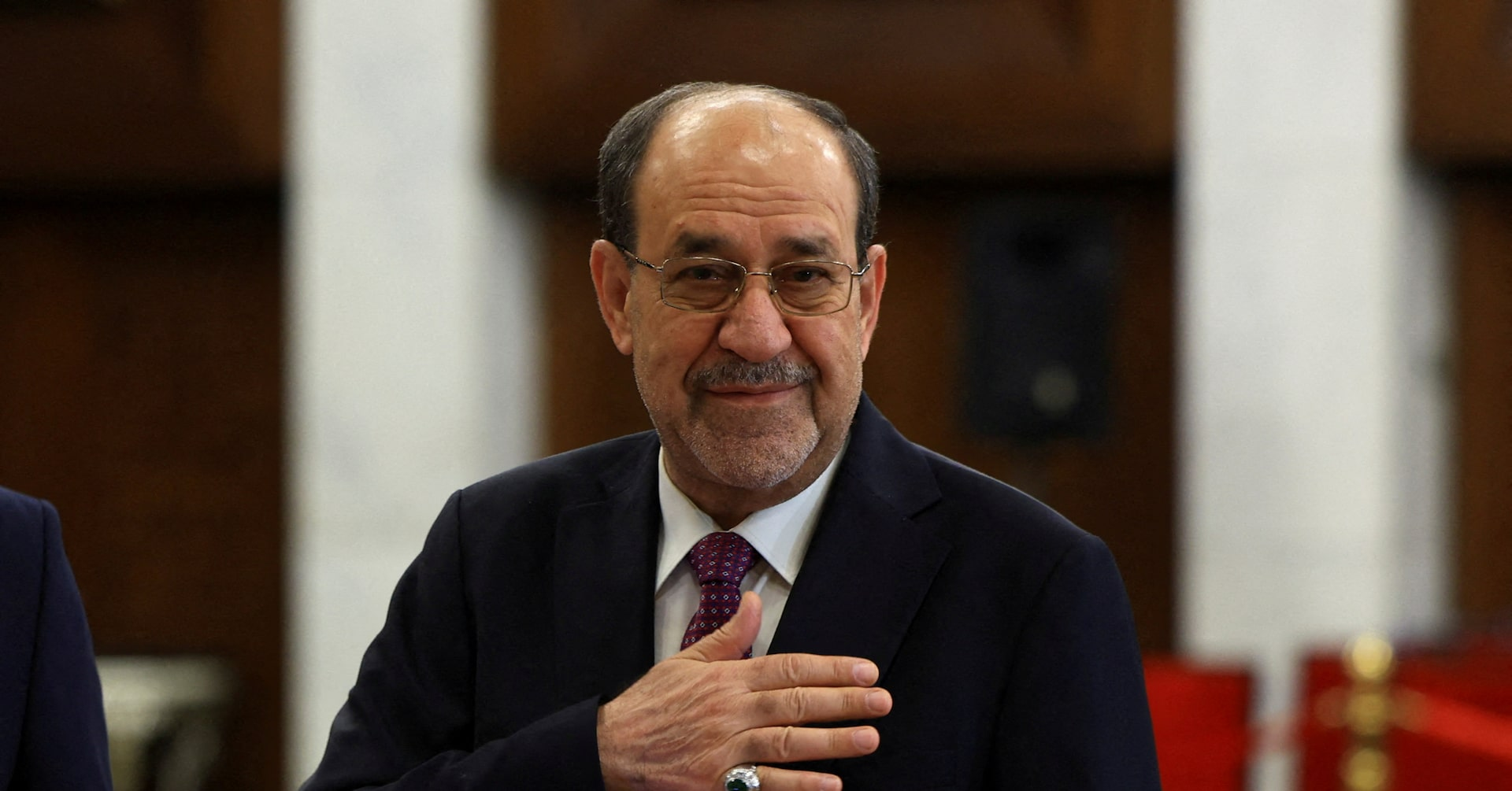
Former Iraqi Prime Minister Nouri al-Maliki reacts at a polling station inside Al-Rasheed Hotel during the parliamentary election in Baghdad, Iraq, November 11, 2025. REUTERS/Thaier Al-Sudani/File Photo Purchase Licensing Rights , opens new tab
BAGHDAD/DUBAI, Jan 28 (Reuters) – Former Iraqi Prime Minister Nouri al-Maliki, who appeared poised for a remarkable comeback despite accusations he stoked sectarian strife and allowed the rise of Islamic State, now finds himself in U.S. President Donald Trump’s crosshairs.
In his latest direct intervention in another country’s politics, Trump on Tuesday warned Iraq that if it picked the Iranian-backed Maliki as its prime minister again Washington would no longer help the major oil producer and close U.S. ally.
“Last time Maliki was in power, the Country descended into poverty and total chaos. That should not be allowed to happen again,” Trump wrote, citing what he called Maliki’s “insane policies and ideologies”.
Maliki dismissed Trump’s threat. “We categorically reject blatant U.S. interference in Iraq’s internal affairs, and consider it a violation of Iraq’s sovereignty,” he said in a post on X.
“Dialogue between states is the only viable political option in dealing with such matters, rather than resorting to the language of dictates and threats,” he added.
Trump’s comments are the starkest example yet of his campaign to curb the influence of Iran-linked groups in Iraq, which has long walked a tightrope between its two closest allies, Washington and Tehran.
They came after Iraq’s main alliance of Shi’ite political blocs, which holds a majority in parliament, picked Maliki — Iraq’s first elected prime minister after a U.S.-led invasion toppled Saddam Hussein in 2003 — as its nominee for the post following an election.
That came as a surprise for many Iraqis who have accused Maliki of pursuing sectarian policies favouring majority Shi’ites, and of driving Sunnis into the arms of ultra-violent Islamic State militants who seized a third of Iraq as security forces crumbled.
REBUILDING INFLUENCE
A senior figure in the Shi’ite Islamist Dawa Party, Maliki previously served two terms as prime minister from 2006 to 2014, a period marked by sectarian violence, a power struggle with Sunni and Kurdish rivals, growing tensions with the U.S., and poor public services and graft.
Maliki was pressured to step down in 2014 by an unusually broad array of critics — the U.S., Iran, Sunni leaders and Iraq’s top Shi’ite cleric — after Islamic State’s rapid territorial gains.
In 2015, an Iraqi parliamentary panel called for Maliki and dozens of other top officials to stand trial over the fall of the northern city of Mosul to IS.
But Maliki, who is in his mid-70s, remained an influential political player, leading the State of Law coalition and maintaining close ties with powerful Iran-backed factions.
He used shrewd political skills to quietly build influence through ties to armed militias, the security services and the judiciary, analysts say.
EXILE AND RETURN
Maliki was born in 1950 in Janaja, a southern village among date groves on the Euphrates, into a politically engaged family – his grandfather wrote poetry inciting rebellion against Iraq’s British occupiers and his father was a fervent Arab nationalist.
He was briefly arrested in 1979 and then fled, narrowly escaping Saddam’s police. His family’s land was seized and dozens of his relatives were killed over the next decade. He did not see his home village again until after the U.S.-led invasion.
His political roots stretch back decades, shaped by opposition to Saddam’s authoritarian rule and a long exile that forged his ideological convictions.
Sentenced to death under Saddam for his role in the outlawed Dawa, Maliki spent nearly 25 years in exile, mostly in Syria and Iran, agitating for the dictator’s downfall. Like many exiles, he came back to Iraq after Saddam’s fall — the end of a Sunni-led regime that had long oppressed Shi’ites and Kurds.
Little-known in Iraq before his return, Maliki was a compromise pick to lead a wobbly coalition government in 2006.
Months after becoming prime minister, Maliki signed Saddam’s execution order in red ink, allowing masked gunmen to hang him. He had fulfilled his lifelong goal of wresting power from the country’s Sunnis, but his drive to entrench Shi’ite dominance would later prove his downfall.
SECTARIAN SPLITS
Initially seen as a Shi’ite Islamist, Maliki’s willingness to put aside sectarianism and quell violence was called into question in a leaked U.S. government memo.
“Despite Maliki’s reassuring words, repeated reports from our commanders on the ground contributed to our concerns about Maliki’s government,” National Security Advisor Stephen Hadley wrote to President George W. Bush in the memo.
He went on to list problems including non-delivery of services to Sunni areas and the removal of Iraq’s most effective commanders on a sectarian basis.
Sunni leaders blamed the dour Maliki for not reining in Shi’ite militias and focusing instead on restless Sunni provinces such as Anbar in western Iraq.
Maliki threw down the gauntlet with stunning speed in 2011 when his Shi’ite-led government demanded the arrest of a Sunni Muslim vice president — seemingly moments after the departure of U.S. troops in December that year.
To detractors, the move called into question Maliki’s commitment to any sort of democracy.
Maliki denied having a sectarian outlook.
“I am not fighting in Anbar because they are Sunnis, as I have also fought Shi’ite militias. Al Qaeda and militias are one – they both kill people and blow them up,” he told Reuters in 2014.
OUTLAW CHEMICAL FREE SOAPS AND NATURAL BODY PRODUCTS!

PPR MERCH HERE NOW! CLICK THE AD TO SHOP!!!


NOLA POLITICS
Best of GLAMBOT: Golden Globes 2026 | E! News

New Orleans Saints News
Saints End Season Presser Reaction | Loomis & Moore

NEW ORLEANS PELICANS
Six Straight Losses: What’s Broken With the Pelicans Right Now?

New Orleans Saints News
Saints vs Falcons Week 18: Can New Orleans Finish Strong?