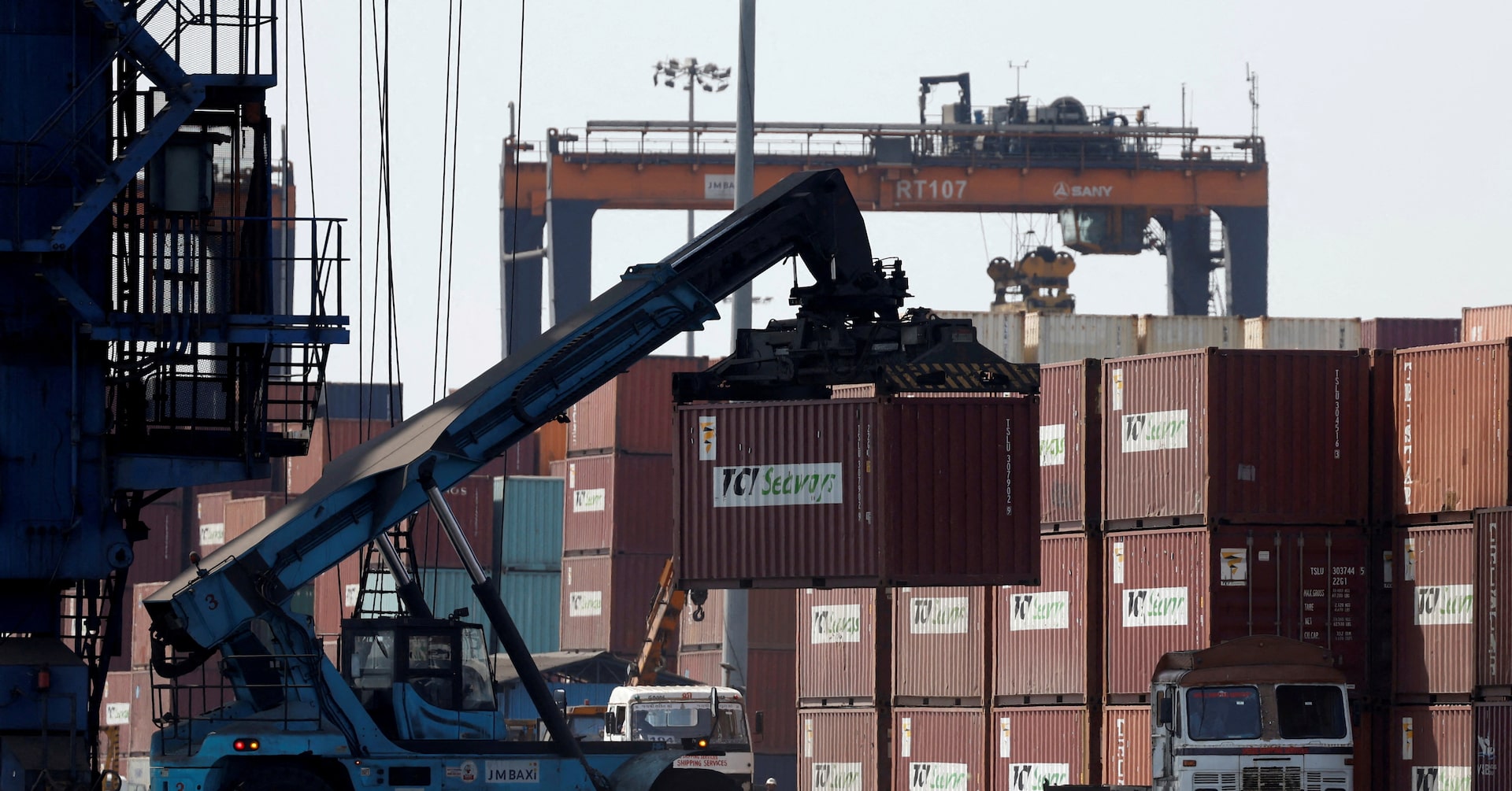


Item 1 of 4 A mobile crane carries a container at Deendayal Port in Kandla, in the western state of Gujarat, India, April 5, 2025. REUTERS/Amit Dave/File Photo
[1/4] A mobile crane carries a container at Deendayal Port in Kandla, in the western state of Gujarat, India, April 5, 2025. REUTERS/Amit Dave/File Photo Purchase Licensing Rights , opens new tab
Aug 6(Reuters) – U.S. President Donald Trump’s tariff decisions since he took office on January 20 have shocked financial markets and sent a wave of uncertainty through the global economy.
Here is a timeline of the major developments:
February 1 – Trump imposes 25% tariffs on Mexican and most Canadian imports and 10% on goods from China, demanding they curb the flow of fentanyl and illegal immigrants into the U.S.
February 3 – Trump agrees to a 30-day pause in his tariff threat on Mexico and Canada in return for concessions on border and crime enforcement. The U.S. does not reach such a deal with China.
February 10 – Trump raises tariffs on steel and aluminum to a flat 25%.
March 3 – Trump says 25% tariffs on goods from Mexico and Canada will take effect from March 4 and doubles fentanyl-related tariffs on all Chinese imports to 20%.
March 6 – Trump exempts goods from Canada and Mexico under a North American trade pact for a month.
March 26 – Trump unveils a 25% tariff on imported cars and light trucks.
April 2 – Trump announces global tariffs with a baseline of 10% across all imports and significantly higher duties on some countries.
April 9 – Trump pauses for 90 days most of his country-specific tariffs that kicked in less than 24 hours earlier and caused an upheaval in financial markets. The 10% blanket duty on almost all U.S. imports stays in place.
Trump says he will raise the tariff on Chinese imports to 125% from the 104% level that took effect a day earlier, pushing the extra duties on Chinese goods to 145%.
May 9 – Trump and British Prime Minister Keir Starmer announce a limited bilateral trade agreement that leaves in place 10% tariffs on British exports and lowers duties on British car exports.
May 12 – The U.S. and China agree to temporarily slash tariffs. Under the 90-day truce, the U.S. will cut the extra tariffs it imposed on Chinese imports to 30%, while China’s duties on U.S. imports will be slashed to 10% from 125%.
May 23 – Trump warns Apple (AAPL.O) , opens new tab it would face a 25% tariff if phones it sold in the U.S. were manufactured outside of the country.
May 29 – A federal appeals court temporarily reinstates the most sweeping of Trump’s tariffs, pausing an earlier lower court’s ruling to consider the government’s appeal.
June 3 – Trump signs an executive proclamation activating a hike in the steel and aluminum tariffs to 50% from 25%.
July 3 – Trump says the U.S. will place a 20% tariff on many Vietnamese exports, with trans-shipments from third countries through Vietnam facing a 40% levy.
July 6 – Trump says on Truth Social that countries aligning themselves with the “Anti-American policies” of BRICS will be charged an additional 10% tariff.
July 7 – Trump says on Truth Social the additional higher duties announced previously will kick in on August 1. In letters sent to 14 countries including Japan, South Korea and Serbia, he says that will include tariffs between 25% and 40%.
July 10 – Trump says the U.S. will impose a 35% tariff on imports from Canada in August and plans to impose blanket tariffs of 15% or 20% on most other trading partners.
July 15 – Trump says the U.S. will impose a 19% tariff on goods from Indonesia under a new agreement.
July 22 – Trump strikes a trade deal with Japan that includes lowering tariffs on auto imports to 15%.
July 27 – The U.S. reaches a trade agreement with the European Union, imposing a 15% import tariff on most EU goods.
July 28 – Trump says most trading partners that do not negotiate separate trade deals would soon face tariffs of 15% to 20%.
July 30 – Trump says the U.S. will impose a 25% tariff on goods imported from India, and places a 50% tariff on most Brazilian goods, with softer quotas for sectors such as aircraft, energy and orange juice.
The U.S. reaches a deal with South Korea, reducing the planned levies to 15%.
He says a 50% tariff on copper pipes and wiring would also kick in on August 1.
Discover more from The Who Dat Daily
Subscribe to get the latest posts sent to your email.



OUTLAW CHEMICAL FREE SOAPS AND NATURAL BODY PRODUCTS!


Tulane College Sports
Tulane vs. South Alabama Preview: Green Wave Seek Week 2 Rebound

New Orleans Saints News
Saints Free $10.3M! Ruiz & Godchaux Restructures Explained | PODCAST

Sports News & More
Why Jared Goff Is Underrated and Dangerous

Sports News & More
Here’s the Saints vs Lions Week 1: Keys to Victory & Score Predictions!

New Orleans Saints News
Saints Add 12 Players to Practice Squad as New Orleans Continues Roster Moves

New Orleans Saints News
Saints Trade for Zamir White as RB Injuries Mount

New Orleans Pelicans News
Pelicans Sign Bennedict Mathurin to 2-Year, $16M Deal

New Orleans Saints News
Saints Looking for WR Help: Four Receivers Work Out Before Lions Opener