

- Scoring 123 Points Should Be Enough to Compete
- Trey Murphy III Looked Like the Offensive Weapon New Orleans Needs
- Jeremiah Fears Keeps Making His Case
- Zion Williamson Was Efficient — But Efficiency Alone Wasn’t Enough
- The Bench Was Supposed to Be a Strength
- The Defensive Identity Is Still Missing
- Jamahl Mosley Must Reevaluate the Rotation
- Four Straight Wins Now Feel Like a Distant Memory
- What’s Next: A Difficult Test Against Golden State
- Final Thoughts: The Pelicans Need an Identity, Not Another Excuse
New Orleans gets strong performances from Trey Murphy III, Zion Williamson and Jeremiah Fears, but another defensive breakdown sends the Pelicans to their second straight defeat.
INGLEWOOD, Calif. — Four consecutive victories had given the New Orleans Pelicans a reason to believe their season was turning around.
Two games later, that optimism is facing a serious test.
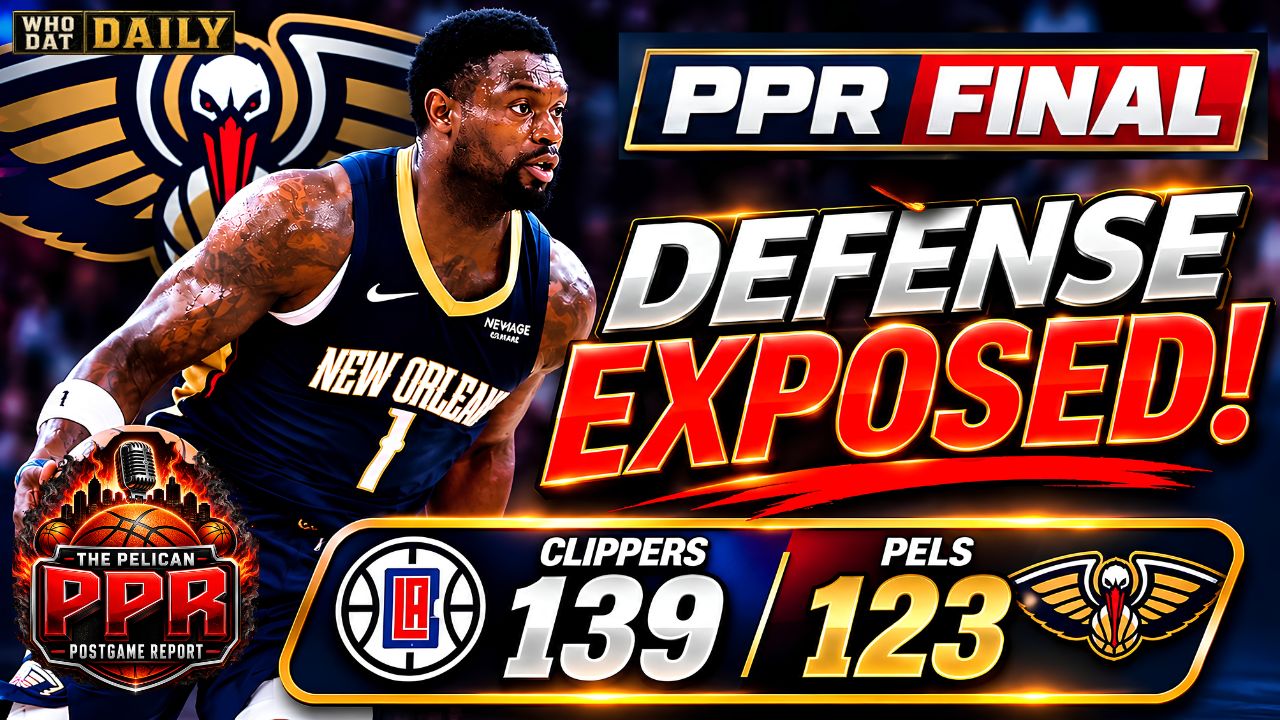
The Los Angeles Clippers defeated New Orleans 139–123 Sunday night at Intuit Dome, handing the Pelicans their second consecutive loss and exposing the defensive problems that head coach Jamahl Mosley was hired to correct.
This wasn’t a defeat caused by one cold shooting stretch or an inability to produce offensively.
New Orleans scored 123 points.
Three Pelicans reached the 25-point mark.
And the team still lost by 16.
That is the troubling reality facing Mosley and a roster that has shown flashes of promise without consistently delivering the defensive discipline necessary to compete in the Western Conference.
The Clippers entered Sunday having lost seven consecutive games.
The Pelicans gave them exactly the opportunity they needed to end that skid.
Scoring 123 Points Should Be Enough to Compete
There are nights when an offense simply doesn’t have it.
Sunday wasn’t one of them.
Trey Murphy III finished with 26 points, seven rebounds and three assists, providing the aggressive perimeter scoring New Orleans desperately needs.
Jeremiah Fears added 25 points, six rebounds, five assists and two steals, continuing an impressive stretch of offensive production.
Zion Williamson also scored 25 points, converting all nine of his field-goal attempts.
Those performances should have put the Pelicans in position to challenge Los Angeles throughout the night.
Instead, New Orleans repeatedly found itself trying to recover from defensive breakdowns.
The Clippers scored 139 points, moved the basketball effectively and consistently generated better offensive opportunities.
That is not a sustainable formula for the Pelicans.
An offense can produce spectacular individual performances and still fail if the defense cannot provide enough resistance.
Sunday was a painful example.
Trey Murphy III Looked Like the Offensive Weapon New Orleans Needs
Murphy’s performance was one of the few developments worth celebrating.
He attacked offensively, made perimeter shots and helped provide spacing for a team that has struggled to consistently threaten opponents from beyond the arc.
Murphy and Fears combined to make seven three-pointers on 14 attempts.
The rest of the Pelicans managed just three makes on 15 attempts.
That disparity highlights a significant problem.
New Orleans needs more dependable perimeter production across its rotation.
When opponents can focus their defensive attention on Murphy, Zion and Fears without consistently paying a price elsewhere, the offense becomes easier to manage.
Murphy did his part.
But the Pelicans need more than one reliable perimeter scorer to build a dependable offensive identity.
Jeremiah Fears Keeps Making His Case
If the Pelicans are searching for encouraging developments through their first 10 games, Jeremiah Fears belongs near the top of the list.
The young guard finished with 25 points while contributing across the box score.
His six rebounds, five assists and two steals reflected a player doing more than simply hunting scoring opportunities.
Fears has demonstrated a willingness to attack, create opportunities and compete even when the game becomes difficult.
That aggressiveness is valuable.
But there is a larger concern.
The Pelicans cannot expect a developing guard to repeatedly compensate for the inconsistencies of their veteran rotation.
Fears should be allowed to grow within a functioning system.
He shouldn’t have to rescue it every night.
Zion Williamson Was Efficient — But Efficiency Alone Wasn’t Enough
Williamson produced one of the most efficient scoring performances of the evening.
He finished with 25 points on a perfect 9-for-9 shooting performance.
That’s remarkable production.
But it also raises an important question.
How does a player with that level of efficiency finish with only nine field-goal attempts in a game where his team desperately needs offense?
The answer involves more than Zion’s individual aggressiveness.
It also involves the Pelicans’ offensive structure, spacing, play-calling and ability to create favorable opportunities for their most physically imposing player.
Mosley must find ways to consistently involve Williamson without allowing the offense to become predictable.
When Zion is converting everything he attempts, New Orleans should be looking for opportunities to make opposing defenses respond to that pressure.
The Pelicans have the talent to do it.
The challenge is building an offense that consistently makes it happen.
The Bench Was Supposed to Be a Strength
One of the more encouraging aspects of New Orleans’ four-game winning streak was the production of its second unit.
Against the Clippers, that advantage disappeared.
Saddiq Bey struggled offensively, making only three of his 12 field-goal attempts.
Herb Jones finished with a minus-23 plus-minus rating, while Trendon Watford also endured a difficult outing.
Four of the five primary bench contributors finished with a plus-minus worse than minus-10.
Plus-minus is not a complete measure of individual performance, but those numbers reflect how badly New Orleans struggled during several bench-heavy stretches.
The Clippers’ reserves helped change the game.
New Orleans’ second unit couldn’t consistently respond.
That creates a difficult situation for Mosley.
The Pelicans need their reserves to provide energy, defense and offensive support.
They cannot afford extended stretches where substitutions create opportunities for opponents to take control.
The Defensive Identity Is Still Missing
When Mosley arrived in New Orleans, accountability, toughness and defensive improvement became central themes.
Those expectations remain appropriate.
But the results have been inconsistent.
Against Los Angeles, the Pelicans surrendered 139 points while allowing the Clippers to distribute 34 assists.
New Orleans recorded only 23 assists.
The Pelicans also committed 16 turnovers while forcing just 11.
That combination tells a revealing story.
Los Angeles moved the basketball more effectively, protected possessions more consistently and repeatedly exploited New Orleans’ defensive weaknesses.
The Clippers even outscored the Pelicans in the paint.
For a team attempting to establish itself through physicality and defensive effort, that is unacceptable.
Defense isn’t simply about individual athleticism.
It requires communication, discipline, positioning and five players working together.
Too often Sunday, the Pelicans failed to demonstrate those qualities.
Jamahl Mosley Must Reevaluate the Rotation
The Pelicans are now 4–6.
Ten games into the season, the sample is still relatively small.
But the patterns are becoming difficult to ignore.
New Orleans has enough offensive talent to compete with quality opponents.
What it lacks is consistent execution across its entire rotation.
Mosley must examine whether his current combinations provide enough defensive resistance, floor spacing and offensive balance.
The starting group has struggled to establish dependable chemistry.
The bench, which helped fuel the winning streak, failed to deliver against Los Angeles.
And the team continues to surrender too many scoring opportunities.
Those problems require adjustments.
Not panic.
Not another complete overhaul.
But clear decisions about which lineups can defend, which combinations maximize Zion’s effectiveness and which players can maintain the team’s intensity when the starters rest.
The Pelicans cannot build a winning identity without first establishing a dependable rotation.


Four Straight Wins Now Feel Like a Distant Memory
The Pelicans deserve credit for recovering from their 0–4 start.
Their victories over Sacramento, Atlanta, Memphis and Utah demonstrated resilience and offensive potential.
But the losses to Minnesota and Los Angeles have exposed a familiar concern.
New Orleans can play exciting basketball without consistently playing winning basketball.
The difference is discipline.
The difference is defense.
And the difference is execution when opponents begin attacking the team’s weaknesses.
A four-game winning streak showed what this roster might become.
These two defeats have shown what it still needs to fix.
What’s Next: A Difficult Test Against Golden State
The Pelicans travel to face the Golden State Warriors on Monday, November 9.
That matchup offers little time to recover.
New Orleans must address its defensive communication, transition coverage, turnovers and bench production immediately.
The team cannot afford another performance where strong individual scoring nights are wasted by an inability to stop the opponent.
Murphy, Williamson and Fears have demonstrated that the offense possesses meaningful talent.
Now Mosley must get the entire roster playing with the same urgency on the defensive end.
Final Thoughts: The Pelicans Need an Identity, Not Another Excuse
The most frustrating part of Sunday’s loss is that New Orleans had enough offensive production to make the game competitive.
Murphy scored 26.
Fears scored 25.
Zion scored 25 without missing a shot.
And the Pelicans still lost by double digits.
That should tell everyone inside the organization something.
The problem isn’t simply finding players who can score.
It’s creating a team that understands how to defend, execute and sustain effort for 48 minutes.
Mosley was brought to New Orleans to help establish that standard.
Ten games into the season, the work remains unfinished.
The Pelicans don’t need another reminder of their potential. They need to start turning that potential into consistent basketball.


Discover more from The Who Dat Daily
Subscribe to get the latest posts sent to your email.