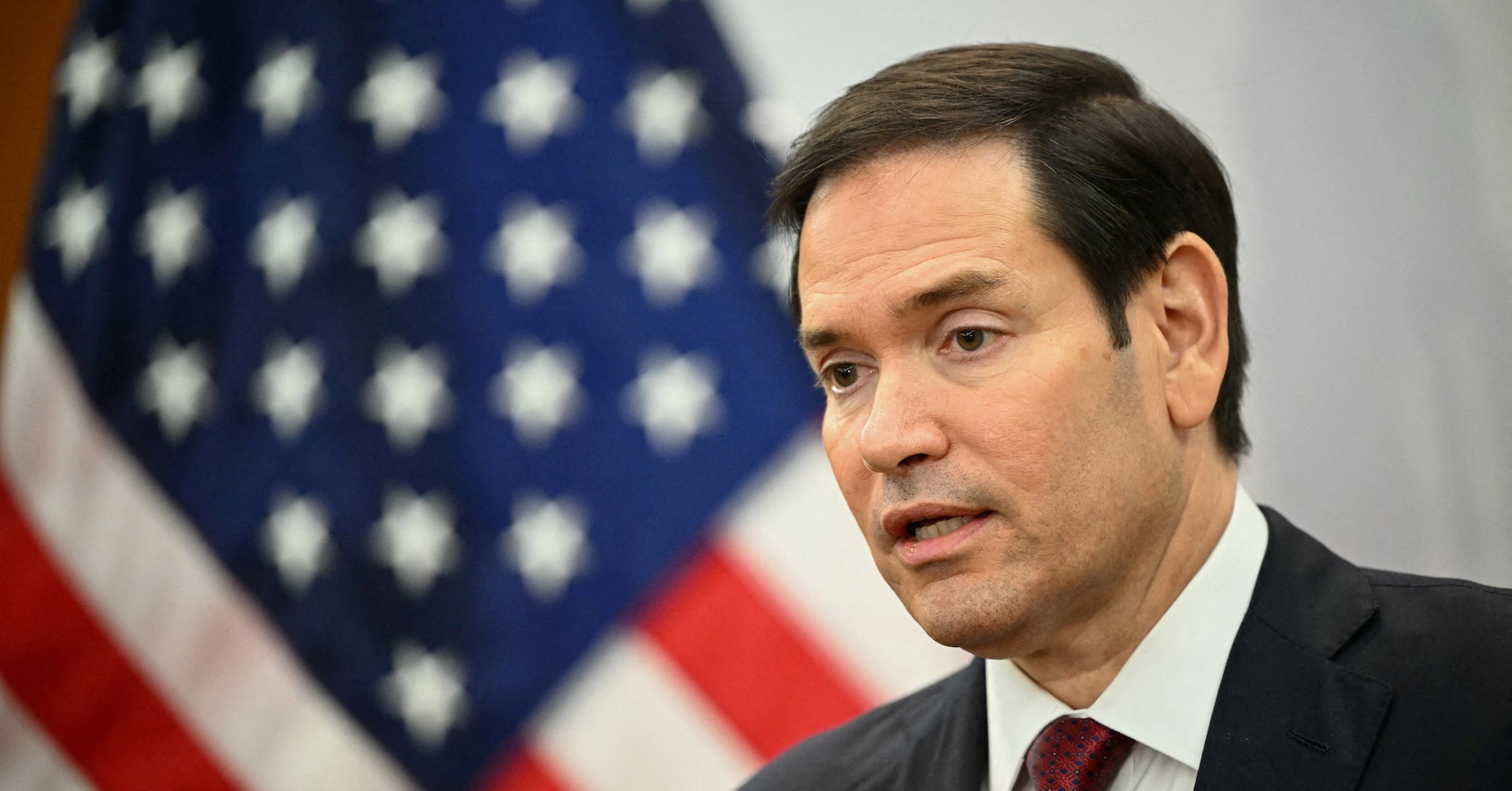


US Secretary of State Marco Rubio takes part in a media briefing during the 58th Association of Southeast Asian Nations (ASEAN) Foreign Ministers’ meeting and related meetings at the Convention Centre in Kuala Lumpur, Malaysia on July 10, 2025. MANDEL NGAN/Pool via REUTERS Purchase Licensing Rights , opens new tab
KUALA LUMPUR, July 10 (Reuters) – U.S. Secretary of State Marco Rubio on Thursday responded to news that an individual used an artificially generated voice to impersonate him by saying that he communicates with counterparts around the world through official channels to avoid such risks.
According to a diplomatic cable seen by Reuters on Tuesday, the individual contacted three foreign ministers and two U.S. officials last month, pretending to be Rubio.
Speaking to reporters during a visit to Malaysia, Rubio suggested there had been earlier attempted impersonations.
He said “within days of becoming secretary of state,” a job he took over on Jan. 21, he had had foreign ministers calling the State Department “asking if I had just texted them.”
“This is just the reality of the 21st century with AI and fake stuff that’s going on,” he said. “Generally I communicate with my counterparts around the world through official channels for a reason, and that’s to avoid this.”
He added: “My sense is … the target is the people they’re reaching out to to try to trick them into a call or whatever, and who knows what they do with it.”
He said more such incidents could be expected.
“I mean, not just me. It’ll happen to other people, because all you need is a recording of someone’s voice, and you can come up with it. So, yeah, it’s just one of the other great challenges posed to us by AI.”
According to the cable, in mid-June the imposter contacted the ministers, a U.S. governor and a member of Congress via the Signal messaging app and left voicemails for at least two of them. In one instance, a text message was sent to invite the targeted person to communicate on Signal.
In March, the U.S. administration faced a crisis when President Donald Trump’s then-national security adviser, Mike Waltz, created a group chat on Signal where a journalist was accidentally added. Information about military strikes on Yemen was subsequently shared in the chat.
Our Standards: The Thomson Reuters Trust Principles. , opens new tab
Suggested Topics:
Daphne Psaledakis is a foreign policy correspondent based in Washington, D.C., where she covers U.S. sanctions, Africa and the State Department. She has covered the rollout of U.S. sanctions on Russia after Moscow’s invasion of Ukraine, Washington’s efforts to enforce its sanctions and the U.S. response to the conflict in Ethiopia, among other issues. She previously covered European Union politics and energy and climate policy for Reuters in Brussels as part of an Overseas Press Club Foundation fellowship in 2019. Daphne holds a Bachelor of Journalism in Print and Digital News and a Bachelor of Arts in International Studies.
Read Next
Kyiv won billions of dollars in aid pledges at the Ukraine Recovery Conference in Rome.
Site Index
About Reuters
Stay Informed
Information you can trust
Reuters, the news and media division of Thomson Reuters, is the world’s largest multimedia news provider, reaching billions of people worldwide every day. Reuters provides business, financial, national and international news to professionals via desktop terminals, the world’s media organizations, industry events and directly to consumers.
Discover more from The Who Dat Daily
Subscribe to get the latest posts sent to your email.



OUTLAW CHEMICAL FREE SOAPS AND NATURAL BODY PRODUCTS!


Tulane College Sports
Tulane vs. South Alabama Preview: Green Wave Seek Week 2 Rebound

New Orleans Saints News
Saints Free $10.3M! Ruiz & Godchaux Restructures Explained | PODCAST

Sports News & More
Why Jared Goff Is Underrated and Dangerous

Sports News & More
Here’s the Saints vs Lions Week 1: Keys to Victory & Score Predictions!

New Orleans Saints News
Saints Add 12 Players to Practice Squad as New Orleans Continues Roster Moves

New Orleans Saints News
Saints Trade for Zamir White as RB Injuries Mount

New Orleans Pelicans News
Pelicans Sign Bennedict Mathurin to 2-Year, $16M Deal

New Orleans Saints News
Saints Looking for WR Help: Four Receivers Work Out Before Lions Opener