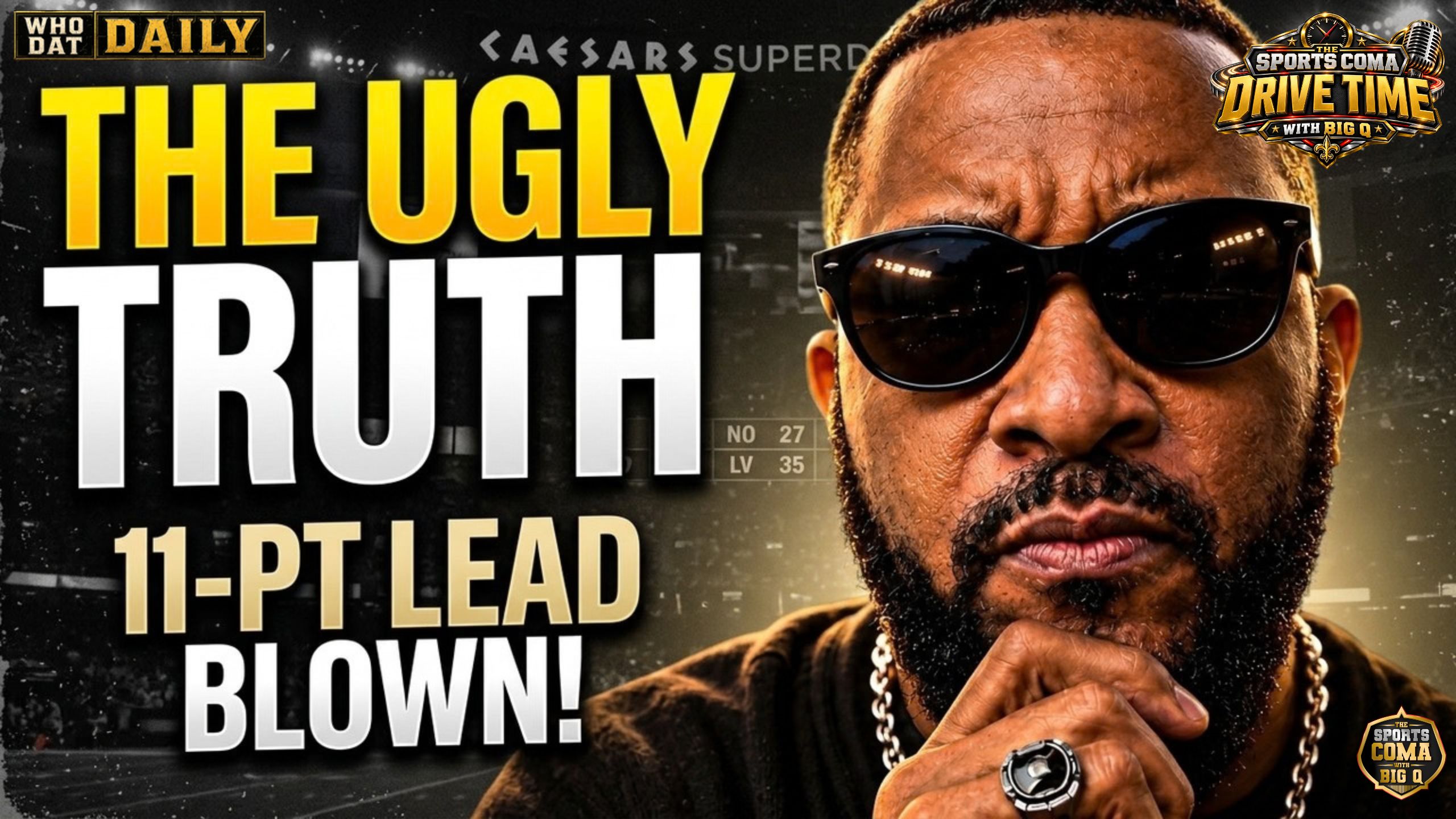

The New Orleans Saints lost their 2026 home opener 35–27 to the Las Vegas Raiders after turning a 27–16 third-quarter lead into a fourth-quarter collapse. Tyler Shough threw four touchdowns—two each to Juwan Johnson and Noah Fant—but New Orleans gave the ball away on all four of its fourth-quarter possessions and surrendered 19 unanswered points. In this edition of Drive Time, Big Q examines what worked, what broke down and what the Saints must fix before facing the Atlanta Falcons. Here are 20 Good, Bad & Ugly takeaways from Week 3.
Quick facts
- Final: Raiders 35, Saints 27
- Records: Saints 1–2; Raiders 3–0
- Saints’ largest lead: 27–16 in the third quarter
- Tyler Shough: 29-of-42 passing, 255 yards, four touchdowns and one interception
- Deciding stretch: Four Saints giveaways on four fourth-quarter possessions
- Next: Saints host the Falcons on Monday Night Football.
The Good
1. Shough showed how high this offense can climb. Four touchdown passes in a home opener should have been enough to win. His performance before the turnovers showed how effectively New Orleans can move the ball when it stays on schedule.
2. Juwan Johnson delivered in scoring position. Johnson caught eight passes and scored twice. He remained a dependable target when the field tightened near the goal line.
3. Noah Fant gave the Saints a second tight-end threat. Fant caught two touchdowns of his own, including the 16-yard score that put New Orleans ahead 27–16. The two tight ends combined for all four Saints touchdowns.
4. Chris Olave kept producing. Olave finished with nine catches for 107 yards and crossed 4,000 career receiving yards. Even without a touchdown, he gave Shough a reliable option between the scoring plays.
5. The offense finished drives. New Orleans scored touchdowns on all four of its red-zone trips. That efficiency is a foundation the team can carry into Week 4.
6. A special-teams takeaway created a scoring chance. Anfernee Jennings forced a fumble on a Raiders kickoff return, Jordan Howden recovered, and the Saints quickly turned the short field into Fant’s second touchdown.
7. Chase Young supplied pressure. Young recorded two sacks. The pass rush produced individual wins even as the defense struggled to prevent Las Vegas from scoring.
The Bad
8. Brock Bowers was a matchup problem. In his season debut, the Raiders tight end caught 10 passes for 116 yards and the touchdown that pushed Las Vegas ahead 35–27. New Orleans has to find better answers for productive tight ends.
9. The defense allowed Las Vegas to hang around. The Saints’ third-quarter surge built an 11-point lead, but a quick Raiders touchdown drive cut it to five before the fourth quarter began.
10. Mike Washington Jr.’s 36-yard touchdown changed the pressure. His run made it 27–22. The Saints still led, but the margin for another mistake had shrunk.
11. New Orleans could not sustain the next possession. After the ensuing kickoff went out of bounds, the Saints started at their own 40. They gained 17 yards, took a delay-of-game penalty and punted instead of making the Raiders chase the clock.
12. Protection became a closing-time issue. Raiders pressure disrupted Shough as New Orleans tried to preserve the lead. The offense must give him a cleaner platform when an opponent knows a pass may be coming.
13. The fast start did not produce a halftime lead. The Saints put together long touchdown drives in the first half, yet trailed 16–13 at the break. Productive possessions have to be matched by defensive stops.
14. The Saints outgained the Raiders and still lost by eight. New Orleans finished with a 381–340 yardage advantage. The result shows how little those yards mattered once Las Vegas began taking the ball away.

The Ugly
15. Every fourth-quarter possession ended in a giveaway. The sequence was lost fumble, interception, lost fumble, lost fumble. No offense can protect a narrow lead—or mount a comeback—while ending four straight drives that way.
16. The first Shough fumble flipped the lead. Malcolm Koonce hit Shough as he attempted to throw, and Maxx Crosby recovered. The ruling was disputed, but the Raiders kept possession and scored the touchdown that put them ahead 28–27.
17. The interception handed Las Vegas another short field. Hezekiah Masses picked off Shough on the next Saints drive. The Raiders soon converted that opportunity into a touchdown to Bowers.
18. A second Shough fumble erased a late scoring chance. With New Orleans trying to answer from inside Raiders territory, another lost fumble ended the drive.
19. The final Johnson fumble shut the door. The Saints had one last chance to move the ball, but Johnson lost possession and Las Vegas recovered with less than a minute remaining.
20. Nineteen unanswered points defined the finish. New Orleans led 27–16 and did not score again. The Raiders’ comeback turned a promising Shough performance into a painful lesson in protecting both the football and a lead.
What it means for the Saints
The loss should not erase the offensive progress. Shough and his tight ends showed that New Orleans can finish drives, while Olave and the pass rush supplied more positives. But the fourth quarter made the priority unmistakable: the Saints need steadier protection, better ball security and a defensive plan that prevents one opponent from repeatedly controlling the middle of the field.
New Orleans now turns to a home Monday Night Football matchup with Atlanta. Before then, the challenge for Kellen Moore’s team is to turn three quarters of promising football into a complete game.
Watch Big Q’s full Good, Bad & Ugly breakdown
More on The Who Dat Daily: Read the full Saints–Raiders game recap.
Discover more from The Who Dat Daily
Subscribe to get the latest posts sent to your email.






New Orleans Saints
Saints vs. Raiders: 20 Good, Bad & Ugly Takeaways From the 35–27 Loss


New Orleans Saints
Saints vs. Raiders: 21 Keys to a Week 3 Win in the Superdome | Drive Time

Tulane College Sports
Tulane Rallies Past Southern Miss 24-21 as Maurice Turner Runs Wild


New Orleans Saints News
Saints vs. Ravens Week 2 Full Preview: Can New Orleans Shock Baltimore?

New Orleans Saints News
Saints News: Thursday Practice Updates & Coordinator Pressers | Big Q

New Orleans Saints News
Saints Restructure Ruiz and Godchaux, Create $10.33M in Cap Space