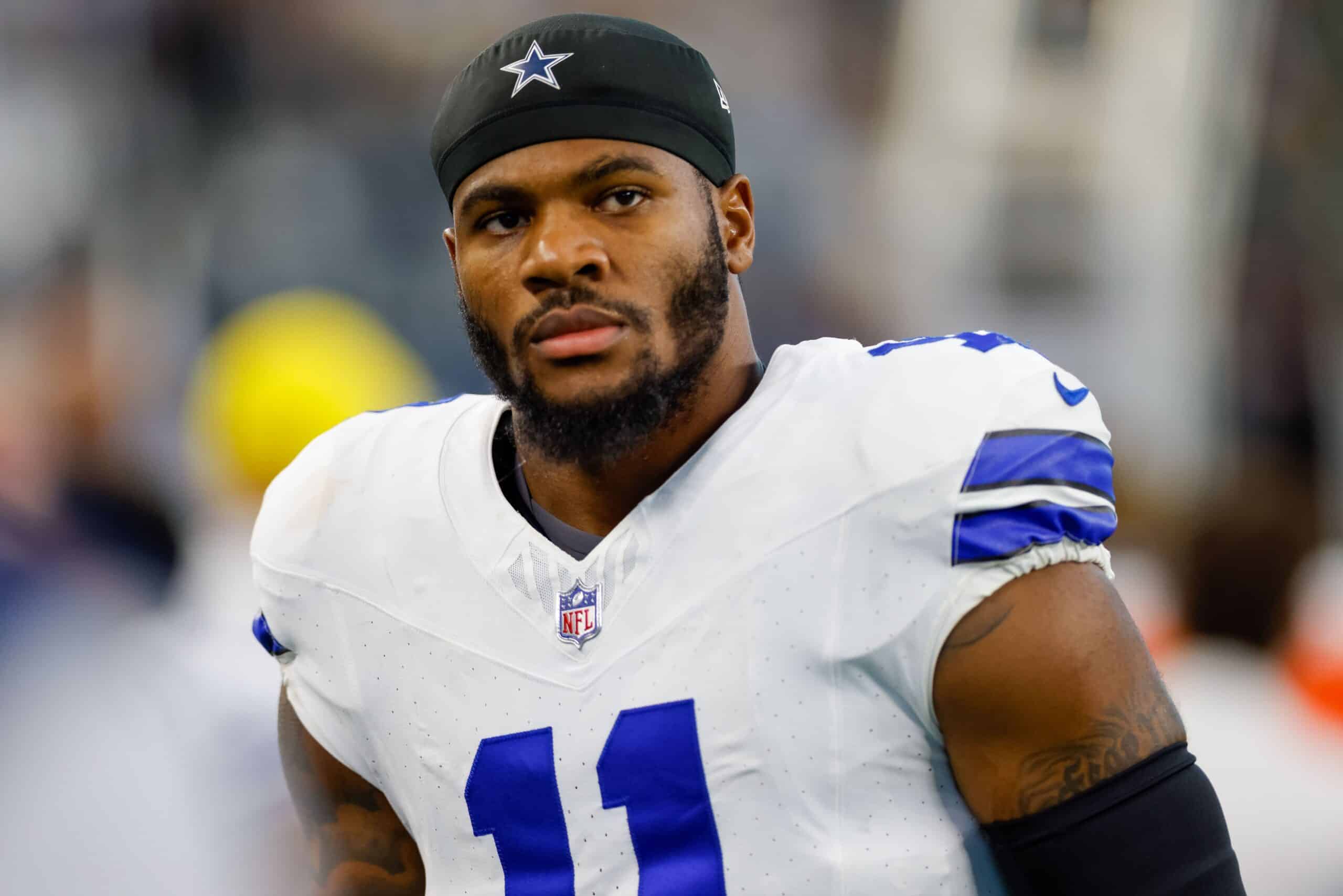
It wouldn’t be summer in Dallas without some contract drama, and DE Micah Parsons has obliged in recent days. Parsons has been eligible for a new deal since last offseason and has made it clear he’d prefer to have that wrapped up sooner rather than later.
Of course, the Cowboys prefer to take the opposite approach to these massive contracts despite a credible argument they’re costing themselves money and team chemistry. Owner Jerry Jones seems to relish the headlines, and there have certainly been plenty of those since Parsons reached a boiling point and requested a trade.
Parsons laid out the situation in a lengthy social media post and it covers the meat of the disagreement pretty well, so I’ll let him speak for himself.
Thank you Dallas ! I pic.twitter.com/EUnEj9uRUt
— Micah Parsons (@MicahhParsons11) August 1, 2025
One of Jones’ favorite negotiating tactics is to speak to players directly, circumventing the agent as much as possible, and there are tons of examples of him trying to pull this off. Jones does this to try and get a better deal, taking advantage of players who are paid to play football, not negotiate high-profile contracts. In this case, Parsons didn’t fall for it and there’s been some fallout.
Trade requests are another tactic worth digging into, as they’re one of the tools players frequently use in negotiations to try and exert leverage for their side of things. When a player asks a team to trade him, it does an extraordinary job of generating headlines. It’s far less effective at actually catalyzing a trade. Ravens QB Lamar Jackson , Bengals WR Tee Higgins , 49ers WR Brandon Aiyuk and Browns DE Myles Garrett are just a small handful of players who have requested trades the past few years. All ended up signing long-term deals instead. Money — lots of it — tends to patch over these situations.
In the vast majority of these situations, players are already under contract which limits their leverage. If they don’t play, they don’t get paid and get fined on top of that. Teams and players both want to avoid the nuclear option of a holdout, providing extra incentive for a compromise on the contract.
That’s the most likely outcome here. The Cowboys will eventually come to the table with an offer for Parsons that resets the market at his position, which at this point is well over $40 million a year given how many other edge rushers have signed deals this offseason. This is what happened with QB Dak Prescott , WR CeeDee Lamb and RB Ezekiel Elliott , the other high-profile contract situations in Dallas recently. There’s almost no incentive to trade Parsons now when he’s still under contract for the upcoming season and there’s no way to really replace him.
But let’s just suspend belief for a second. If the Cowboys somehow did decide they’d rather trade Parsons than pay him, what would that deal look like?
Building An Offer For Parsons
There are 31 other teams that would love to have a player like Parsons — an elite, game-wrecking pass rusher who is already on a Hall of Fame pace through his first four seasons. But there are a few ways to whittle down the market.
For starters, the Cowboys are not trading Parsons inside the NFC East, where he can torment them for six games a year. Ideally they’d like to get him out of the NFC entirely, as it will minimize how often they have to play him. It would also be tough for a rebuilding team to give up the kind of asset package required to land Parsons and still fill out the rest of the team. More on that in a minute.
Parsons can influence his landing spot, too. No team will trade for Parsons without assurances that he’d sign an extension with them first, and more than likely, they’d want to have the framework of a contract agreed to ahead of time. That dynamic gives Parsons essentially a no-trade clause to scuttle a deal to a team he doesn’t like and steer his way to a team more serious about competing for a Super Bowl.
All of these factors point to a contending team. As far as what they’d have to give up, it won’t be cheap. Start with a deal worth $42-$45 million a year with massive guarantees, probably the first three years of the deal. From there, the trade for DE Khalil Mack is a good starting point. The Raiders traded Mack to the Bears in the midst of contract negotiations before his fifth season, receiving two firsts, a third and a sixth while sending back a second and a conditional fifth. Mack was going into his age-27 season and had 40.5 sacks, two first-team All Pro selections, three Pro Bowls and a Defensive Player of the Year Award under his belt.
Parsons hasn’t won DPOY (yet) but he’s in his age-26 season and has 52.5 career sacks, two first-team All Pro selections and four Pro Bowls. Mack hasn’t had a season with more than 30 quarterback hits in his career, Parsons has done it twice in his first four seasons. He’s a better player and trade asset than Mack was. At minimum, take the Mack deal and drop the picks going back the other way — and an asking price of three first-round picks or equivalent value would not be outside the realm of reason.