-
-
by
Gee Bino

- Tulsa Took Control Before Tulane Could Respond
- The Third Quarter Made an Ugly Game Even Worse
- Tulane’s Offense Had No Answers
- A Defensive Performance That Cannot Be Excused
- Turnovers Turned a Bad Afternoon Into a Rout
- Homecoming Embarrassment Raises Questions About Accountability
- A Fourth-Quarter Touchdown Couldn’t Hide the Damage
- What the Loss Means for Tulane’s Season
- What’s Next: Tulane Travels to Rice
- Final Thoughts: Tulane Has Reached a Defining Moment
The Green Wave surrendered a Yulman Stadium-record 60 points, struggled to move the football and watched a promising Homecoming afternoon become a harsh examination of the program’s direction.
#RollWave 🌊 pic.twitter.com/Z7jNdUDHwh
— Tulane Football (@GreenWaveFB) November 7, 2026
NEW ORLEANS — Homecoming is supposed to be a celebration. A chance for former players, students and alumni to reconnect with the program, fill Yulman Stadium with energy and watch their team defend its home field.
Saturday afternoon, Tulane gave its supporters something entirely different.
A nightmare.
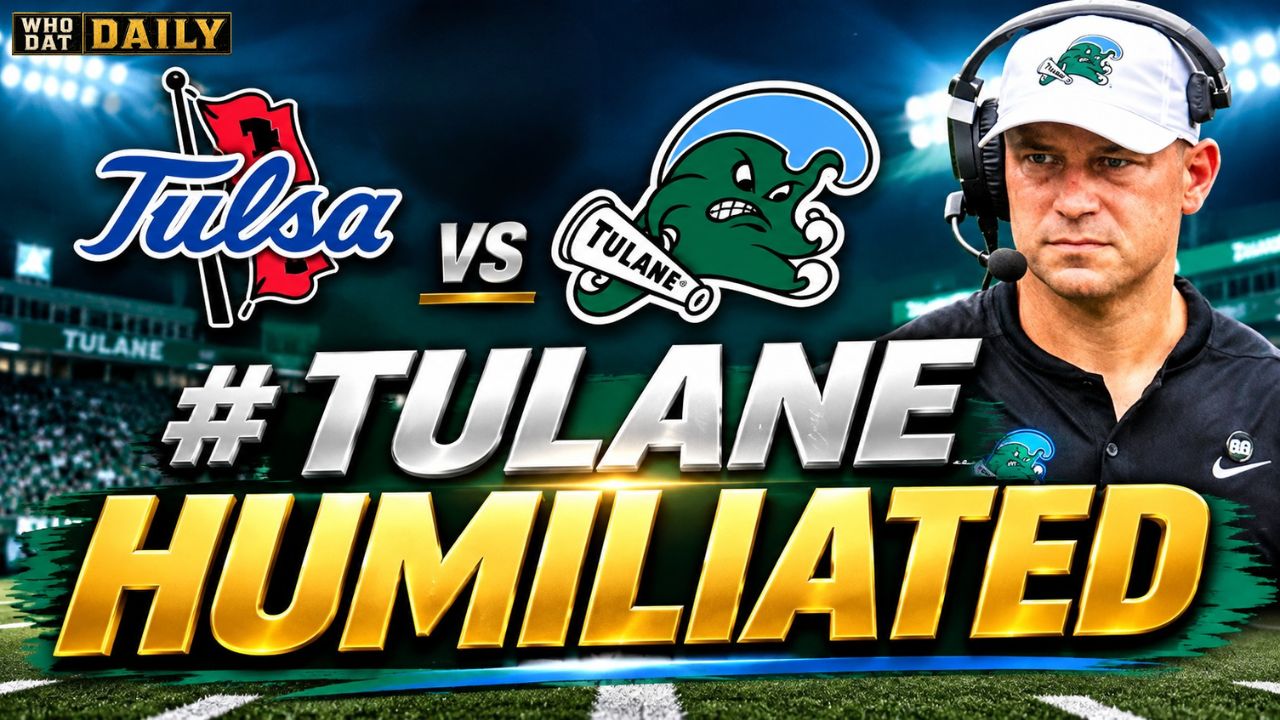
The Tulsa Golden Hurricane walked into Yulman Stadium and dismantled the Green Wave 60–10, turning a conference matchup into a humiliating afternoon that exposed troubling weaknesses on both sides of the football.
It wasn’t merely the margin of defeat that made this performance alarming.
It was how completely Tulsa controlled the game.
The Golden Hurricane scored 32 unanswered points before halftime, extended their advantage to 46–0 through three quarters and established a Yulman Stadium record with 60 points.
Tulane didn’t score until the fourth quarter.
For a program that has worked to establish itself as a consistent contender in the American Conference, this was more than a bad Saturday.
It was a performance that demands answers.
Tulsa Took Control Before Tulane Could Respond
Tulsa made its intentions clear on the opening possession.
Quarterback Baylor Hayes connected with Oran Singleton on a two-yard touchdown pass, giving the Golden Hurricane an early 7–0 advantage.
Tulane needed an immediate response.
Instead, the offense stalled, the defense continued surrendering scoring opportunities and the game quickly began slipping away.
Tulsa extended its lead with a 26-yard Owen Carey field goal early in the second quarter.
Hayes then connected with Jimmy Calloway for a seven-yard touchdown, pushing the advantage to 17–0.
A Tulane turnover gave Tulsa another opportunity, and Javon Ross capitalized with an 11-yard touchdown.
Before the Green Wave could regroup, Hayes found Singleton again for a three-yard score.
Tulsa converted the ensuing two-point attempt, sending the teams into halftime with the Golden Hurricane leading 32–0.
At that point, the contest had effectively become a test of Tulane’s ability to show resistance.
That resistance never arrived.
The Third Quarter Made an Ugly Game Even Worse
Any hope of a second-half comeback disappeared quickly.
After Tulane failed to generate momentum on its opening possession, Hayes connected with Singleton for a 27-yard touchdown.
It was Singleton’s third touchdown reception of the afternoon.
Tulsa led 39–0.
Damari Alston added a six-yard touchdown run later in the quarter, extending the advantage to 46–0.
Through three quarters, Tulane had failed to score a single point while allowing six Tulsa touchdowns.
The Golden Hurricane weren’t simply taking advantage of isolated mistakes.
They were winning the line of scrimmage, creating explosive plays, capitalizing on turnovers and repeatedly finding favorable matchups.
Tulane had no sustained answer.
That is what makes the result so concerning.
Losing to a conference opponent is disappointing.
Being overwhelmed in virtually every phase of the game is something else entirely.
Tulane’s Offense Had No Answers
The Green Wave finished with only 204 total yards.
Tulsa accumulated 562.
That 358-yard difference tells much of the story.
Tulane struggled to protect its quarterbacks, establish the running game and sustain drives long enough to give its defense meaningful rest.
Quarterback Trace Johnson completed 11 of 19 passes for just 69 yards and an interception.
Dagan Bruno completed four of six passes for 43 yards, one touchdown and one interception.
Bruno’s touchdown pass to Bredell Richardson came with only one second remaining, long after the outcome had been decided.
Running back Johnnie Daniels led Tulane with 49 rushing yards on 10 carries.
Destyn Hill provided one of the few offensive bright spots, catching four passes for 55 yards.
But isolated contributions couldn’t overcome the broader offensive breakdown.
Tulsa recorded six sacks.
Six.
That number should concern Tulane’s coaching staff as much as the final score.
An offense cannot function consistently when its quarterbacks are repeatedly pressured, its protection breaks down and turnovers provide opponents with favorable field position.
The Green Wave needed offensive balance and sustained execution.
They delivered neither.
A Defensive Performance That Cannot Be Excused
Tulsa finished with 31 first downs and 562 total yards.
The Golden Hurricane threw for 338 yards and repeatedly exploited Tulane’s defensive vulnerabilities.
Baylor Hayes found receivers in scoring position, while Tulsa’s rushing attack provided additional balance.
The result was a defense that appeared unable to consistently disrupt the quarterback, control the running lanes or prevent drives from turning into touchdowns.
Dickson Agu led Tulane with eight tackles.
TJ Smith recorded seven tackles, including one for loss, while Makai Williams added six stops.
Those individual efforts deserve acknowledgment.
But the larger defensive performance was unacceptable.
Allowing 60 points at home is not simply a statistical embarrassment.
It’s a warning sign.
Tulane’s defense struggled to get off the field, surrendering sustained drives and explosive plays that prevented the Green Wave from building any momentum.
When Tulsa reached the red zone, Tulane too often failed to respond.
And when the defense finally needed help from the offense, that help rarely arrived.
Turnovers Turned a Bad Afternoon Into a Rout
One of the most damaging aspects of Saturday’s performance was Tulane’s inability to protect the football.
A second-quarter turnover helped Tulsa stretch its lead to 24–0.
Another turnover late in the game gave the Golden Hurricane an opportunity to reach 60 points.
Tulane’s quarterbacks combined for two interceptions, and the offense repeatedly placed its defense in difficult situations.
Turnovers are especially destructive when a team is already struggling to sustain drives.
They erase scoring opportunities, surrender field position and allow an opponent to maintain offensive momentum.
Tulsa capitalized.
Tulane never recovered.
The coaching staff must examine why the offense struggled so badly with protection, decision-making and ball security.
Those problems cannot be dismissed as unfortunate circumstances.
They were central to the outcome.
Homecoming Embarrassment Raises Questions About Accountability
The most troubling aspect of this loss wasn’t simply that Tulane lost.
It was the absence of sustained competitiveness.
The Green Wave entered Saturday with an opportunity to improve their position in the American Conference and provide supporters with a meaningful Homecoming performance.
Instead, they watched Tulsa build a 46-point advantage before Tulane managed its first points.
That should prompt serious internal evaluation.
Were the players properly prepared for Tulsa’s offensive approach?
Why did the offensive line struggle so badly against pressure?
Why couldn’t Tulane establish a consistent rushing attack?
What adjustments were made after Tulsa began pulling away?
And perhaps most importantly, why did those adjustments fail to change the direction of the game?
These are questions the coaching staff must answer.
Accountability shouldn’t mean searching for someone to blame publicly.
It should mean identifying the decisions, preparation failures and execution problems that contributed to such a lopsided defeat.
A program with Tulane’s ambitions cannot accept performances like this as normal.
A Fourth-Quarter Touchdown Couldn’t Hide the Damage
Tulane finally reached the scoreboard early in the fourth quarter when Cooper Helmke converted a 38-yard field goal.
The kick capped a 14-play, 55-yard drive.
But by then, Tulsa led 46–3.
The Golden Hurricane answered almost immediately with a 31-yard touchdown run by Seth Davis.
Sevion Morrison later added a three-yard touchdown run, pushing Tulsa to 60 points.
Bruno’s late touchdown pass to Richardson provided Tulane’s only trip to the end zone.
It changed the scoreboard.
It did not change the story.
Tulsa had already delivered one of the most dominant visiting performances in Yulman Stadium history.
What the Loss Means for Tulane’s Season
The defeat drops Tulane to 4–5 overall and 2–3 in American Conference play.
Tulsa improves to 5–4 overall and 2–3 in conference competition.
For the Green Wave, the postseason picture has become increasingly uncomfortable.
Tulane needs two victories in its final three regular-season games to reach the traditional six-win threshold for bowl eligibility.
But before discussing bowl possibilities, the team must address the problems that have repeatedly undermined its season.
The defense must become more disciplined.
The offensive line must protect the quarterback.
The offense must establish a reliable identity.
And the coaching staff must find ways to prevent mistakes from snowballing into extended stretches of ineffective football.
The margin against Tulsa suggests those problems are more significant than a few missed assignments.
What’s Next: Tulane Travels to Rice
Tulane will attempt to recover when it travels to face Rice on Saturday, November 14.
That matchup now carries added importance.
The Green Wave cannot afford another performance resembling Saturday’s collapse.
A victory would help restore some confidence and keep postseason possibilities alive.
Another defeat would push Tulane closer to a deeply disappointing finish.
The challenge isn’t simply winning the next game.
It’s demonstrating that the players and coaches have responded to the embarrassment of Homecoming.
That response must begin with better preparation, stronger execution and a commitment to playing disciplined football from the opening possession.
Final Thoughts: Tulane Has Reached a Defining Moment
There are losses that reveal a team’s limitations.
Then there are losses that force a program to confront uncomfortable truths.
Saturday’s 60–10 defeat belongs in the second category.
Tulane wasn’t beaten by one spectacular play, one unfortunate turnover or one questionable decision.
The Green Wave were overwhelmed for nearly the entire afternoon.
Tulsa controlled the trenches, dominated the scoreboard, generated explosive plays and turned Tulane’s mistakes into additional scoring opportunities.
For the Green Wave, the result raises questions that extend beyond one game.
What is this team’s identity?
Where is the leadership when adversity arrives?
And how does a program with aspirations of competing for conference championships respond after allowing a visiting opponent to score a stadium-record 60 points?
Those answers won’t come from another press conference.
They’ll come from what Tulane does next.
Because Homecoming was supposed to celebrate the program’s past. Instead, it exposed serious concerns about its present — and the future now demands a response.
Related
Discover more from The Who Dat Daily
Subscribe to get the latest posts sent to your email.