
By Ted Hesson


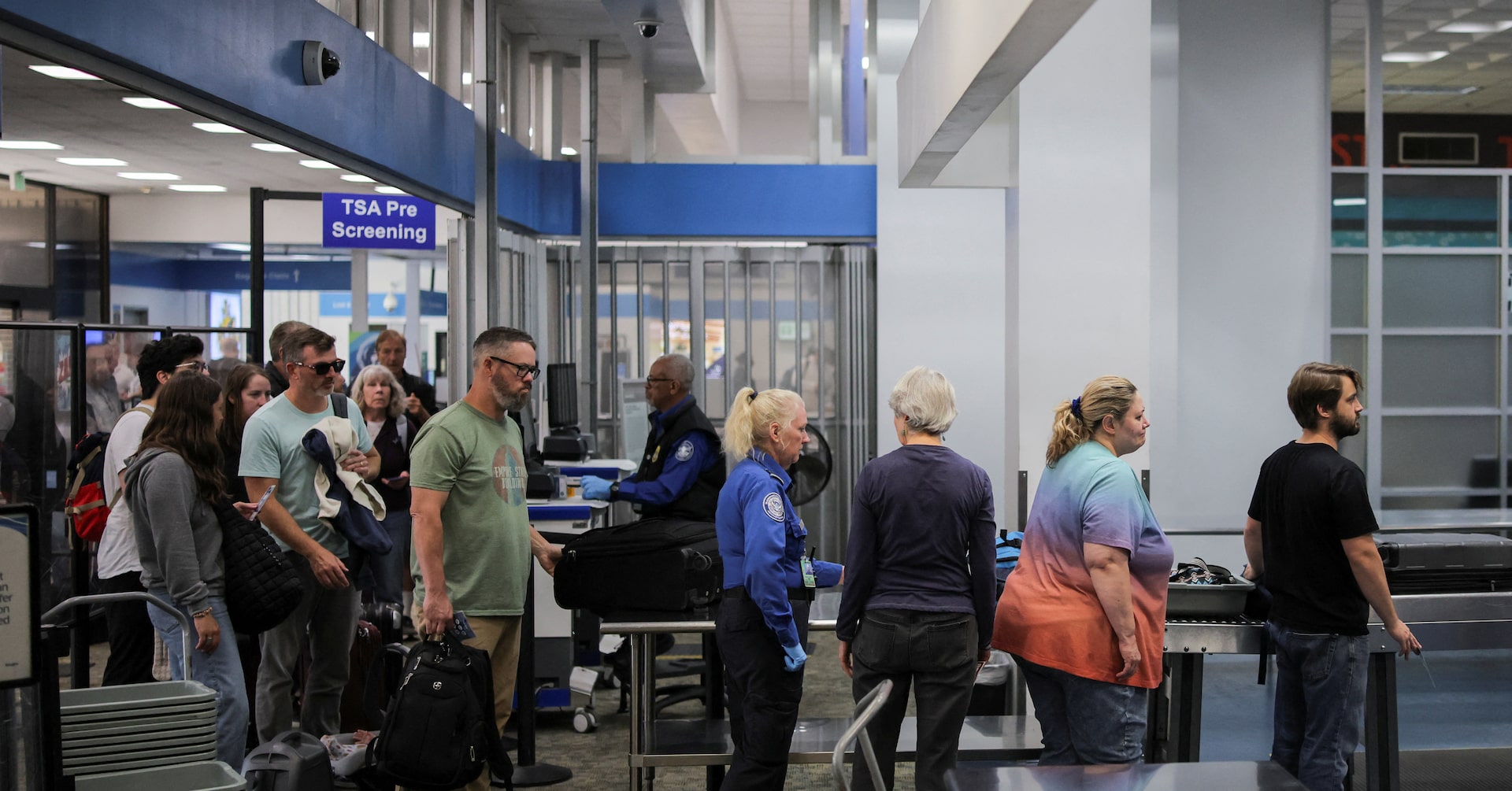
Item 1 of 2 Travelers pass through a Transportation Security Administration (TSA) security screening at Hollywood Burbank Airport during the first day of a partial U.S. government shutdown in Burbank, California, U.S., October 1, 2025. REUTERS/Daniel Cole
[1/2] Travelers pass through a Transportation Security Administration (TSA) security screening at Hollywood Burbank Airport during the first day of a partial U.S. government shutdown in Burbank, California, U.S., October 1, 2025. REUTERS/Daniel Cole Purchase Licensing Rights , opens new tab
WASHINGTON, Oct 24 (Reuters) – The U.S. will expand the use of facial recognition technology to track non-citizens entering and leaving the country in order to combat visa overstays and passport fraud, according to a government document published on Friday.
A new regulation will allow U.S. border authorities to require non-citizens to be photographed at airports, seaports, land crossings and any other point of departure, expanding on an earlier pilot program.
Under the regulation, set to take effect on December 26, U.S. authorities could require the submission of other biometrics, such as fingerprints or DNA, it said.
It also allows border authorities to use facial recognition for children under age 14 and elderly people over age 79, groups that are currently exempted.
The tighter border rules reflect a broader effort by U.S. President Donald Trump to crack down on illegal immigration. While the Republican president has surged resources to secure the U.S.-Mexico border, he has also taken steps to reduce the number of people overstaying their visas.
The growing use of facial recognition in U.S. airports has raised privacy concerns from watchdog groups worried about overreach and mistakes. A 2024 report , opens new tabby the U.S. Commission on Civil Rights said tests had shown facial recognition was more likely to misidentify Black people and other minority groups.
The Congressional Research Service estimated in 2023 that some 42% of the 11 million immigrants in the U.S. illegally at the time had overstayed a visa.
The U.S. Congress in 1996 passed a law mandating the creation of an automated entry-exit system, but it has never been fully implemented.
U.S. Customs and Border Protection already uses facial recognition for all commercial air entries but only employs it to record exits at certain locations, the regulation said.
CBP estimates that a biometric entry-exit system can be fully implemented at all commercial airports and seaports for both entry and exit within the next three to five years.
Our Standards: The Thomson Reuters Trust Principles. , opens new tab
Suggested Topics:
Ted Hesson is an immigration reporter for Reuters, based in Washington, D.C. His work focuses on the policy and politics of immigration, asylum and border security. Prior to joining Reuters in 2019, Ted worked for the news outlet POLITICO, where he also covered immigration. His articles have appeared in POLITICO Magazine, The Atlantic and VICE News, among other publications. Ted holds a master’s degree from the Columbia University Graduate School of Journalism and bachelor’s degree from Boston College.
Discover more from The Who Dat Daily
Subscribe to get the latest posts sent to your email.



OUTLAW CHEMICAL FREE SOAPS AND NATURAL BODY PRODUCTS!


Tulane College Sports
Tulane vs. South Alabama Preview: Green Wave Seek Week 2 Rebound

New Orleans Saints News
Saints Free $10.3M! Ruiz & Godchaux Restructures Explained | PODCAST

Sports News & More
Why Jared Goff Is Underrated and Dangerous

Sports News & More
Here’s the Saints vs Lions Week 1: Keys to Victory & Score Predictions!

New Orleans Saints News
Saints Add 12 Players to Practice Squad as New Orleans Continues Roster Moves

New Orleans Saints News
Saints Trade for Zamir White as RB Injuries Mount

New Orleans Pelicans News
Pelicans Sign Bennedict Mathurin to 2-Year, $16M Deal

New Orleans Saints News
Saints Looking for WR Help: Four Receivers Work Out Before Lions Opener