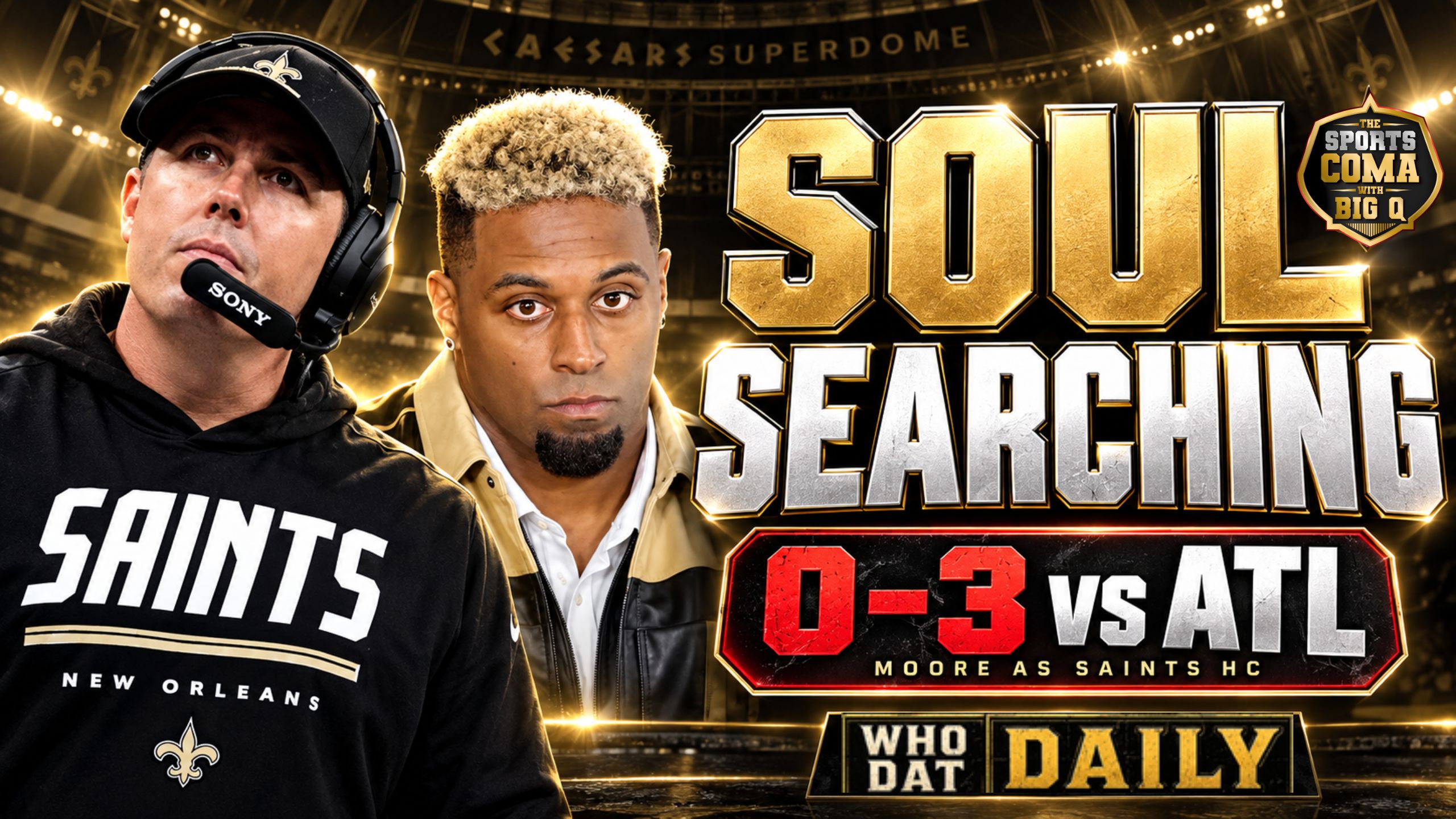

The New Orleans Saints have reached an uncomfortable point early in the season: the explanations are becoming familiar, while the results remain unacceptable.
Monday night’s 45–24 loss to the Atlanta Falcons dropped New Orleans to 1–3 and turned an emotional evening at the Caesars Super dome into another examination of the team’s direction. On a night commemorating the 20th anniversary of the Super dome’s reopening after Hurricane Katrina, the Saints gave their biggest rival control of the game almost immediately. neworleanssaints.com
That frustration drives the latest episode of The Sports Coma with Big Q, which examines Kellen Moore’s performance, the scrutiny surrounding veteran leadership and the growing gap between what the Saints discuss during the week and what they deliver on game day.
Moore’s Atlanta Problem Is Getting Harder to Ignore
Moore is now 0–3 against the Falcons as Saints head coach. Atlanta won both meetings during the 2025 season, 24–10 and 19–17, before delivering Monday’s 21-point defeat. For a coach trying to establish credibility in New Orleans, repeatedly losing this rivalry carries weight. New Orleans Saints – Neworleanssaints.com
Three games do not explain everything about a coaching tenure. They do, however, offer a clear measure of whether the Saints are finding answers against an opponent they must face twice every season.
The latest result raises questions about preparation, adjustments and physical readiness. New Orleans needs a plan that holds up when the opening script fails and the opponent starts dictating the terms.
Moore’s offensive background also makes the evaluation especially direct: is his system helping the Saints play cleaner, more dependable football? A respectable stretch of production cannot erase the mistakes and empty possessions that leave the team chasing the game.
Atlanta Established the Tone Immediately
Bijan Robinson’s 59-yard touchdown run on Atlanta’s third offensive play put New Orleans on the defensive before the evening had settled. The Falcons finished with 205 rushing yards and five rushing touchdowns, exposing a Saints defense that could not consistently control the line of scrimmage. neworleanssaints.com
That kind of performance demands a detailed response. Coaches must examine the calls, run fits and personnel combinations. Players must account for their positioning, tackling and ability to finish assignments.
An injury report can help explain limitations. It cannot serve as the entire explanation for a defense allowing an opponent to impose its preferred style throughout the night.
For New Orleans, improvement begins with making ordinary defensive plays reliably. The Saints cannot build a dependable defense around the hope that one spectacular effort will rescue several failed assignments.
Cam Jordan and the Question of Accountability
Big Q’s discussion also brings Cam Jordan into the conversation about performance and veteran leadership.
The standard should be fair and specific. Every veteran deserves an evaluation based on his actual responsibilities and execution. A familiar name should neither absorb blame for every defensive failure nor escape scrutiny because of past accomplishments.
The larger question is whether leadership produces an observable response. Does the next practice address the mistakes? Do coaches make necessary changes? Does the next game show better communication and execution?
Accountability becomes meaningful when it changes what happens on the field. After a loss like this, the Saints need that connection between their message and their performance.

Shough’s Workload Highlights the Bigger Offensive Question
Tyler Shough completed 30 of 48 passes for 286 yards, one touchdown and no interceptions against Atlanta, according to the Saints’ official game notes. Those numbers provide part of the picture, but they do not establish that the offense functioned well enough to win. 2026 NFL Week 4
Moore must be judged on the environment around his quarterback as well as the quarterback’s final statistics. Protection, early-down efficiency, manageable third downs and the ability to sustain possessions all matter.
The Saints need an offense that helps control the game before the deficit becomes the defining feature of every series. Asking a young quarterback to keep finding answers while the team falls further behind leaves little margin for error.
The Response Has to Be Visible
A 1–3 start leaves time to recover, but urgency must become something more useful than another passionate speech.
New Orleans needs better opening possessions, more dependable defensive execution and coaching adjustments that show up during the game. It also needs an honest assessment of which players are fulfilling their responsibilities and which combinations are giving the team its best chance.
The Falcons loss intensified those questions because of the opponent, the setting and the way the game unfolded. The Saints now have to provide answers through their play.
Watch Big Q’s full discussion below:
Who Dat Nation, what needs to change first: the coaching approach, player execution or both? Join the conversation with The Sports Coma with Big Q.
Discover more from The Who Dat Daily
Subscribe to get the latest posts sent to your email.






NEW ORLEANS PELICANS
Pelicans vs. Heat Preview: New Orleans Needs a Stronger Start After Thunder Comeback


New Orleans Saints
Saints vs. Vikings Preview: New Orleans Needs a Response on Drew Brees Day


NEW ORLEANS PELICANS
Pelicans Open Training Camp With a New Voice, New Depth and No Time to Waste

LSU Football News
LSU Drops to No. 10 in Week 4 AP Poll After Ole Miss Loss