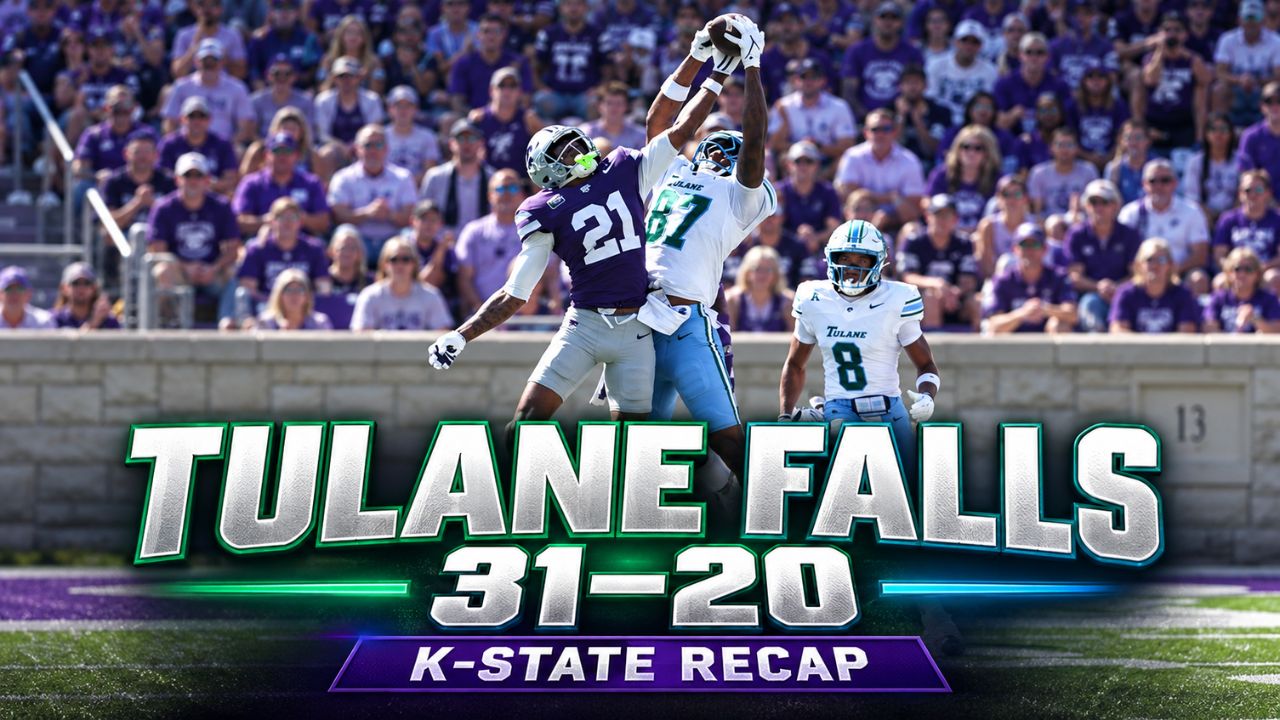
Tulane returned to Manhattan hoping to repeat the program’s memorable 2022 upset, but Kansas State quarterback Avery Johnson made sure there would be no second surprise.
Kansas State defeated the Green Wave 31–20 on Saturday at Bill Snyder Family Stadium, dropping Tulane to 1–2 while the Wildcats completed nonconference play at 3–0.
Tulane scored first and remained within striking distance into the second half. The Green Wave, however, could not contain Johnson’s legs or protect quarterback Kadin Semonza well enough to control the game.
Tulane strikes first
The Green Wave produced the opening breakthrough with an impressive 90-yard touchdown drive. Semonza finished the seven-play possession with a 9-yard scoring run, giving Tulane a 7–0 lead midway through the first quarter.
It was the first time Kansas State had trailed during the 2026 season.
The Wildcats settled in quickly. Luis Rodriguez kicked a 23-yard field goal, Jay Harris scored on a 1-yard run and Johnson broke loose for a 66-yard gain before adding a 7-yard touchdown run. Kansas State had scored 17 consecutive points and taken control, 17–7.
Tulane salvaged points before halftime when Cooper Helmke drilled a 58-yard field goal, cutting the deficit to 17–10.
Kansas State controls the second half
The Wildcats opened the third quarter with the kind of possession that wears down an opponent. Kansas State drove 75 yards in 14 plays and consumed 8:15 before Harris scored his second 1-yard touchdown.
Tulane answered with another long Helmke field goal, this one from 53 yards, to make the score 24–13 late in the third quarter.
Johnson then delivered the finishing blow. His 25-yard run sparked a seven-play, 58-yard drive, and he capped it with a 12-yard touchdown run that extended Kansas State’s lead to 31–13 with 9:06 remaining.
Semonza later found Maurice Turner for a 25-yard touchdown, completing a 75-yard scoring drive and cutting the final margin to 31–20.
The late touchdown gave Tulane something positive to take from the finish, but the Green Wave never regained possession with a realistic opportunity to threaten Kansas State’s lead.
Avery Johnson was the difference
Tulane’s defense had no consistent answer for Johnson’s dual-threat ability.
The Kansas State senior completed 21 of 28 passes for 227 yards and rushed 12 times for 152 yards and two touchdowns. He accounted for 379 of the Wildcats’ 428 total yards and became the first player in Kansas State history to record at least 200 passing yards and 150 rushing yards in the same game.
Jaron Tibbs gave Johnson a reliable target, catching nine passes for 114 yards. Harris supplied the short-yardage finishing power with two rushing touchdowns.
Kansas State finished with 201 rushing yards and averaged enough on the ground to keep Tulane from attacking obvious passing situations. The Wildcats also held the ball for 33:41, more than seven minutes longer than the Green Wave.
Tulane’s offense could not stay on schedule
Tulane finished with 260 total yards: 165 passing and 95 rushing. The Green Wave earned 18 first downs, but too many possessions were disrupted before the offense could reach its full playbook.
Kansas State recorded six sacks and 12 tackles for loss. That pressure forced Semonza to operate behind the chains and limited Tulane’s ability to create explosive plays.
Helmke’s field goals from 58 and 53 yards were impressive, but they also highlighted Tulane’s inability to finish drives in the end zone. Against a quarterback playing as efficiently as Johnson, settling for field goals made it difficult to keep pace.
Three key takeaways
1. Tulane proved it could move the ball early
The opening 90-yard touchdown drive showed the Green Wave could execute against a talented Kansas State defense. The problem was sustaining that rhythm after the Wildcats adjusted.
2. Quarterback containment must improve
Johnson’s 152 rushing yards changed the entire structure of the game. Tulane defenders were forced to account for him as both a designed runner and an escape threat, which opened space for the rest of Kansas State’s offense.
3. Negative plays stalled the comeback
Six sacks and 12 tackles for loss are difficult numbers to overcome on the road. Tulane needed cleaner protection, more manageable third downs and better early-down efficiency to keep Kansas State’s defense from dictating the game.
What the loss means for Tulane
The Green Wave competed better than the final 11-point margin might suggest. Tulane led early, generated two scoring drives of at least 75 yards and received outstanding range from its kicker.
Still, the game exposed the areas that require immediate attention. The offensive line must protect Semonza more consistently, the defense must handle mobile quarterbacks with greater discipline and promising drives must end with touchdowns rather than long field-goal attempts.
Tulane leaves Manhattan at 1–2, but the season remains in front of the Green Wave. The response will depend on whether the team can turn Saturday’s clearest lessons—protection, quarterback containment and red-zone finishing—into corrections before the next stretch of the schedule.