
By Gee Bino | The Who Dat Daily
The Pelicans Summer League takeaways cannot be reduced to a 2–3 record. New Orleans experienced impressive individual performances, two hard-earned victories, noticeable defensive activity, and an ugly 91–73 finale loss to the Indiana Pacers.
Summer League exists to answer questions. Can a young scorer produce against professional athletes? Can a prospect defend multiple positions? Can a former first-round pick rebuild his value? Does an undrafted player possess one NBA-level skill that demands further investment?
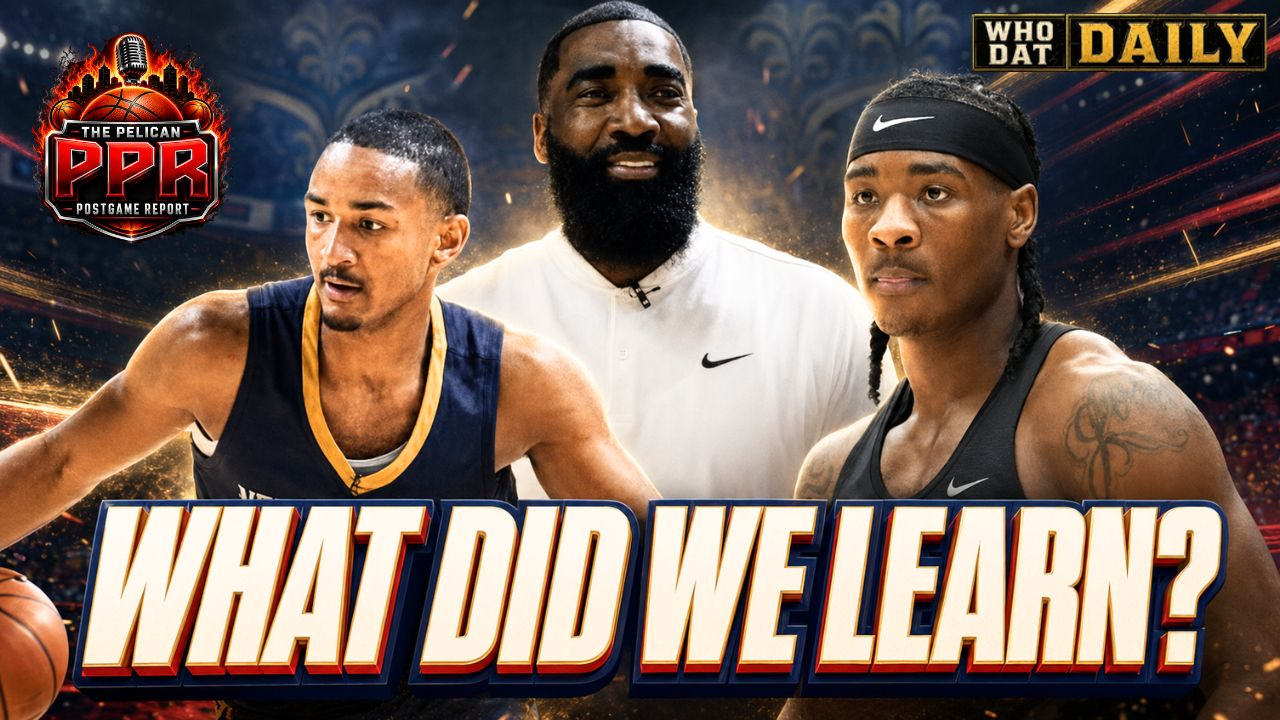
New Orleans received encouraging answers from Kobe Bufkin, Hunter Dickinson, Jaron Pierre Jr., Markquis Nowell and Malik Dia. However, the Pelicans also left Las Vegas with familiar concerns involving playmaking, offensive organization, interior defense and developmental depth.
The final record was not a disaster. The uneven manner in which New Orleans reached 2–3 was far more informative.
Pelicans Summer League Results
New Orleans opened its schedule with a 105–92 loss to Minnesota before responding with consecutive victories over Charlotte and Phoenix. The Pelicans then dropped their final two games against Cleveland and Indiana.
| Opponent | Result |
|---|---|
| Minnesota Timberwolves | Loss, 105–92 |
| Charlotte Hornets | Win, 95–91 |
| Phoenix Suns | Win, 81–75 |
| Cleveland Cavaliers | Loss, 82–77 |
| Indiana Pacers | Loss, 91–73 |
| Final record | 2–3 |
The middle of the schedule produced New Orleans’ best basketball.
Against Charlotte, the Pelicans erased an 18-point deficit and closed the game with a 14–2 run. They forced 22 turnovers while committing only seven, producing an enormous 32–7 advantage in points off turnovers. Hunter Dickinson scored 21 points, while Kobe Bufkin supplied 19. NBA.com’s official recap highlighted how New Orleans turned defensive pressure into offense.
The Pelicans followed that performance with an 81–75 victory over Phoenix. Jaron Pierre Jr. and Malik Dia scored 16 points apiece, while Bufkin added 15 points, four rebounds and two steals. NBA.com described it as a wire-to-wire victory.
Those wins demonstrated what New Orleans could become when its pressure defense, pace and offensive execution worked together.
The final two losses showed how quickly everything could unravel without those ingredients.
Kobe Bufkin Reestablished His NBA Value
The most important of the Pelicans Summer League takeaways involved Kobe Bufkin.
Bufkin entered Las Vegas needing to demonstrate that injuries and inconsistency had not erased the ability that once made him a first-round selection. He responded by averaging 21.3 points, 5.3 rebounds, three assists, two steals and one block across three appearances.
His best performance came in the opener against Minnesota, when he scored 30 points. He followed that with 19 against Charlotte and 15 against Phoenix.
The scoring was encouraging, but Bufkin’s defensive activity and rebounding were equally important. A 6-foot-4 guard who can create offense, pressure the ball and contribute on the glass possesses legitimate developmental value.
However, Bufkin averaged 3.7 turnovers during his three appearances. That matters because the Pelicans need guards who can organize possessions—not merely produce difficult baskets.
Bufkin showed enough to remain part of the conversation. Whether that results in a standard roster spot, two-way opportunity or another developmental arrangement will depend on New Orleans’ remaining flexibility.
He did not prove that he can run an NBA offense full-time. He did prove that his talent still deserves attention.

Hunter Dickinson Displayed a Bankable Offensive Skill
Dickinson’s Summer League was not flawless, but his offensive value was evident.
The 7-foot-1 center averaged 13.3 points, 5.7 rebounds and 2.7 assists across three games. His defining performance came against Charlotte, when he scored 21 points on 9-of-18 shooting and made three of his six three-point attempts.
That shooting ability gives Dickinson a chance.
Traditional centers who cannot protect the rim or switch defensively face a difficult path in the modern NBA. Dickinson must therefore compensate with shooting, passing, rebounding and intelligent positioning.
His ability to step outside opens driving lanes. His passing can help connect half-court possessions. His size provides a target around the basket when opponents switch smaller defenders onto him.
The defensive questions remain. Dickinson must improve his pick-and-roll positioning, lateral mobility and physicality around the rim. He cannot allow his size to create the expectation of rim protection that his current defensive game does not consistently provide.
Still, New Orleans should continue developing him. Big men with legitimate shooting touch are worth investigating, especially when they already understand the organization.
Jaron Pierre Jr. Showed Promise—and the Work Ahead
The Pelicans did not need Pierre to dominate Summer League. They needed the 58th overall selection to demonstrate at least one translatable NBA skill while showing enough versatility to justify a long-term development plan.
Pierre produced his best performance against Phoenix, scoring 16 points with three made three-pointers. He averaged 10 points during his three appearances.
The shooting flashes were encouraging. So were his size and willingness to attack.
However, his 5-of-17 shooting against Phoenix also illustrated the difference between scoring confidence and scoring efficiency. Pierre must improve his shot selection, decision-making and finishing consistency.
As a late second-round pick, he should not be judged against lottery-player expectations. His path will require patience, strength development, defensive growth and significant time with the Laketown Squadron.
One important Pelicans Summer League takeaway is that Pierre possesses tools worth developing. Another is that he does not appear ready for a major NBA rotation assignment.
Both conclusions can be true.
Markquis Nowell Supplied the Missing Organization
Nowell quietly made one of the strongest cases on the roster.
Across five appearances, he averaged 13.2 points, 4.6 assists and three steals. His size creates obvious defensive limitations, but his command, ball pressure and playmaking frequently gave New Orleans needed structure.
That structure was noticeably absent in the finale.
The Pelicans finished with only 14 assists and 22 turnovers against Indiana. New Orleans shot 36 percent from the field and generated only 30 points in the paint. Indiana recorded 28 assists while shooting 45 percent.
Those numbers reflect more than missed shots. They reveal a team that struggled to create advantages and connect possessions.
Nowell may not possess the physical profile New Orleans wants, but he demonstrated why every developmental roster needs a dependable organizer. Athleticism without decision-making can quickly become chaotic basketball.
Malik Dia and the Developmental Frontcourt
Malik Dia also helped himself.
The 6-foot-9 forward averaged 10 points and 5.8 rebounds while appearing in all five games. His 16-point performance against Phoenix showed his scoring potential, while his size and activity gave the Pelicans another frontcourt option to evaluate.
Dia remains a developmental project. His limited playmaking and inconsistent floor spacing narrow his immediate NBA role. However, productive forwards with size, mobility and rebounding ability deserve extended looks.
Solomon Washington also ended Summer League positively despite the lopsided finale. The New Orleans native recorded six points, 11 rebounds and four steals against Indiana.
Washington’s scoring limitations remain, but his energy, rebounding and defensive activity represent identifiable professional skills.
Film Room: Pressure Defense Must Produce Controlled Offense
God Shammgod’s team was most effective when defensive activity created transition opportunities.
Against Charlotte, New Orleans converted turnovers into a decisive scoring advantage. Bufkin, Nowell and the Pelicans’ active wings pressured ballhandlers, jumped passing lanes and attacked before Charlotte could establish its defense.
That formula supported the identity Jamahl Mosley wants to establish with the parent club: physical ball pressure, length, effort and disruptive defense.
The problem appeared when New Orleans could not create transition possessions.
In traditional half-court situations, the Pelicans often lacked organized pick-and-roll execution, reliable spacing and a guard capable of consistently manipulating the defense. Too many possessions ended with a difficult individual attempt rather than a clean shot created by multiple actions.
The finale magnified those weaknesses. Twenty-two turnovers and 14 assists will make almost any offense look disjointed.
The lesson is not that New Orleans needs more aggressive scorers. The roster needs players who process the floor faster and make the next correct decision.
God Shammgod’s First Test Was About Development
It would be unreasonable to judge Shammgod’s coaching future from five Summer League games.
These rosters are assembled quickly. Practice time is limited. Players are simultaneously trying to execute a system and earn employment. Continuity is almost nonexistent.
Still, the experience mattered.
Shammgod oversaw a team that responded to an opening loss with two consecutive victories. The comeback against Charlotte demonstrated resilience. The Phoenix win displayed improved control. The final two losses exposed the group’s lack of consistent offensive organization.
That variation is normal during Summer League, but it also gives Shammgod and Mosley valuable developmental information.
The coaching staff now has game footage showing which players understood assignments, communicated defensively, moved the basketball and maintained effort when shots stopped falling.
Big Q’s Take
The Pelicans’ 2–3 record should neither be celebrated nor treated like a crisis.
Summer League success is determined by development, discovery and information. By that standard, New Orleans accomplished part of its mission.
Bufkin looked like an NBA-caliber talent. Dickinson reinforced the value of his shooting. Pierre showed developmental potential. Nowell supplied playmaking and defensive activity. Dia and Washington offered frontcourt energy.
However, the roster did not reveal an obvious solution to the parent club’s biggest problems.
New Orleans still needs more dependable guard organization, interior resistance and two-way depth. The 91–73 finale was a reminder that athleticism and effort cannot consistently overcome poor execution.
The Pelicans found players worth continuing to evaluate. They did not uncover a prospect who should drastically change the organization’s offseason plans.
Why It Matters
These Pelicans Summer League takeaways matter because New Orleans is attempting to establish a new identity under Mosley.
The Pelicans cannot build a sustainable winner through expensive transactions alone. They need a reliable development system that produces affordable contributors, two-way prospects and emergency depth.
Bufkin could become part of that depth. Dickinson has a specific offensive skill. Pierre represents a longer-term investment. Nowell, Dia, Washington and others gave the front office additional information.
The 2–3 record will soon be forgotten. What New Orleans does with those evaluations will matter much longer.
Summer League did not provide every answer. It clarified the next set of questions—and that is precisely what the event is supposed to accomplish.
Gee Bino is a senior writer and columnist for The Who Dat Daily, covering the New Orleans Saints, Pelicans, LSU athletics, and the Gulf South sports landscape. He specializes in roster construction, player development, salary cap strategy, and breaking news coverage. Follow The Who Dat Daily for daily news, analysis, and exclusive team coverage.
Discover more from The Who Dat Daily
Subscribe to get the latest posts sent to your email.






New Orleans Saints
Saints Beat Giants 34–27: Turning Point or More Questions?

NEW ORLEANS PELICANS
New Voice, Real Stakes: The Pelicans’ 2026–27 Season Outlook


New Orleans Saints
Saints Place Travis Etienne on IR, Add Ojabo and Bentley Before Falcons


New Orleans Saints News
Saints vs. Falcons Preview: Shough, Run Defense and a Chance to Reset