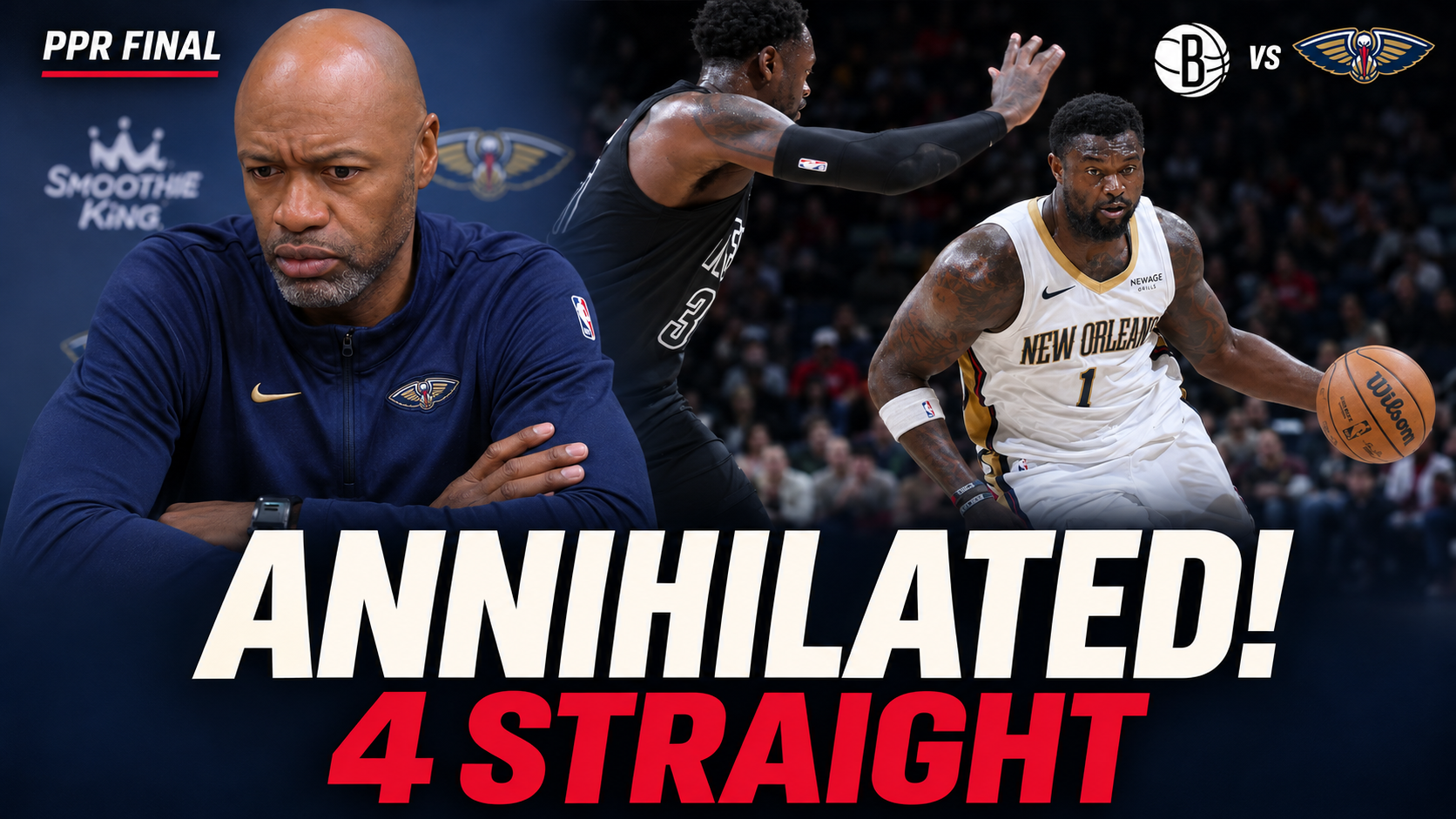


NEW ORLEANS — The Pelicans vs Nets final was ugly enough: Brooklyn 145, New Orleans 111. The deeper concern is how familiar the ending has become. Another opponent found its rhythm, another game moved beyond reach, and a team that recently appeared to be building momentum left with its fourth consecutive loss.
Wednesday’s 34-point defeat at Smoothie King Center dropped the Pelicans to 4–8. Brooklyn improved to 3–8. This was an opportunity for New Orleans to steady itself against another struggling team. Instead, the Nets delivered another difficult measure of how far the Pelicans’ defensive habits must improve.
Pelicans vs Nets turned before halftime
Brooklyn led 39–25 after the first quarter and 83–66 at halftime. New Orleans managed just 15 points in the third, allowing the Nets to take a 107–81 advantage into the fourth.
The first-half scoring matters because it removes the temptation to explain the final margin entirely through late-game substitutions. Brooklyn had already established control while the Pelicans were still trying to make this a contest.
New Orleans scored 41 points in the second quarter and still lost that period by three. For a team trying to climb out of a losing streak, that is a punishing equation: a strong offensive stretch produces almost no relief because the other end keeps giving the points back.
The numbers expose the defensive burden
Brooklyn shot 57 percent from the floor and made 20 of 41 three-point attempts. Michael Porter Jr. and Egor Demin scored 22 points apiece, and eight Nets reached double figures.
| Category | Brooklyn | New Orleans |
|---|---|---|
| Field-goal percentage | 57.0% | 44.2% |
| Three-pointers | 20–41 | 12–30 |
| Assists | 30 | 19 |
| Turnovers | 13 | 16 |
The breadth of Brooklyn’s scoring makes this more troubling than one star getting hot. The Pelicans needed to interrupt the Nets’ flow across several matchups, and the final numbers show how little resistance that offense encountered.
New Orleans has allowed 139, 138 and 145 points in its past three games. That is 422 points conceded across three losses. The 51-point defeat against Golden State had already created urgency. Brooklyn added another reason to demand visible defensive progress.
Zion’s production needs a stronger foundation
Zion Williamson led the Pelicans with 29 points. New Orleans also made 40 percent of its three-point attempts. Those contributions should give an offense something to work with, yet the game still ended with a margin that overwhelmed any individual bright spot.
Williamson’s scoring remains valuable. The challenge is building enough reliable possessions around it: limiting turnovers, getting organized after misses and making the opponent work before a shot goes up. An offense has a much narrower margin for error when every empty trip threatens to become another defensive scramble.
Mosley’s next response must show up in the rotation
For Jamahl Mosley, the review should reach beyond the final score. Which combinations can contain the ball? Who completes the next rotation after help arrives? Which groups can finish a defensive possession and then generate a sensible shot at the other end?
Those are the questions that should shape minutes and substitutions. If a lineup repeatedly fails to meet a defensive assignment, the staff needs a workable adjustment. If the same problems follow different groups onto the floor, the teaching and communication deserve scrutiny, too.
Players share that responsibility. Clear instructions still require physical execution, attention and a willingness to make the next play after a mistake. Consistency will have to become a condition of playing time.
Memphis offers the next test
The Pelicans host Memphis on Friday, November 13. The first useful sign of a response will be sustained defensive organization: fewer easy decisions for the opponent, possessions completed with rebounds and mistakes corrected before they repeat.
Four straight losses have made the stakes clear. New Orleans needs a competitive standard that survives an opponent’s run, and it needs to demonstrate that standard for an entire game.
Watch PPR Final with Big Q
Watch the Pelican Postgame Report reaction to the Brooklyn defeat, then join the conversation: what should New Orleans change first?

Follow more New Orleans sports coverage at Who Dat Daily and connect with the shows through the P.R.O. Media Network hub.

Discover more from The Who Dat Daily
Subscribe to get the latest posts sent to your email.